Old Lea County, N.M.

Category: history

  • Jal Becomes a City, 1950

    Governor’s Proclamation

    [Transcribed from the Jal Record, Jal, New Mexico, 27 Apr 1950.]

    This proclamation, made, issued and published this 24th day of March, in the year of our Lord one thousand nine hundred and fifty, by the undersigned, Thomas J. Mabry, governor of the State of New Mexico, that:

    Whereas, on 6th day or February, 1950, the incorporated town of Jal, Lea County, New Mexico, by resolution duly enacted expressed the desire through its board of trustees, to apply to the governor of the state or New Mexico to make, issue and publish a proclamation of the fact that the said town desires and is entitled to become a city as provided by section 14-317 and 14-318 New Mexico statutes annotated 1941 compilation, and

    Whereas, the mayor of said town of Jal was designated by the said board of trustees to act as chairman for the purpose of making a sworn statement showing the facts and matters required by law to be stated in such application, and

    Whereas, the said chairman, by sworn statement and with the unanimous approval of the said board of trustees and with the attestation of the town clerk, did state and show following facts, to-wit:

    l. That the name of the proposed city is the City of Jal.

    2. That the boundaries of the proposed city and the lands to included therein as shown by the attached plat are as follows:

    Jal townsite: Section 17, 18, 19, 20, 29 and 30, township 25th south, range 37 east, Lea county, New Mexico.

    Beginning at the southeast corner of Jal townsite said said point being the southeast corner of said section 29, thence west along the south boundary of said section 29 and 30 a distance or 8940.0 feet to the southwest corner of said townsite, thence north to a distance of 9355.9 feet, thence north 19 degrees and 46 minutes east a distance of 688.5 feet to the northwest corner of said townsite, thence south 89 degrees and 52 minutes east along the north boundary of said section 18 a distance of 1321,2 feet to the common corner between said section 17 and 18 and section 7 and 8, said township and range, thence north 89 degrees and 37 minutes east along the north boundary of said section 17 a distance of 5280.0 feet to the northeast corner of said section 17 and the northeast corner of said townsite, thence south 0 degrees and 02 minutes east along the east boundary of said 17, 20 and 29 a distance of 15840.0 feet to the point of beginning, containing 3075.44 acres, more or less.

    3. That the center of said proposed city as heretofore established by the Board of trustees of the town of Jal is as follows:

    Commencing at the point where the NE corner of the SE 1/4 of section 19, and the NW corner of the SE 1/4, section 20, township 25 south, range 37 east N. M. P. M, coincide for a point of beginning, which point is the center of the proposed city of Jal.

    4. That the boundaries of said proposed city do not exceed one and one half miles from the center of the proposed city as set forth above.

    That the estimated assessed valuation of all property within the limits of said proposed city as shown the official record of Lea county is $595,203.00.

    6. That the population of the proposed city is in excess of 2000.

    7. That the town of Jal is entitled to become and desires to become a city.

    NOW, therefore, in accordance with the laws in this case made and provided, and the power vested in me as governor of the state of New Mexico, the said town of Jal be, and is hereby proclaimed to be a city, to be designated as the City of Jal, with all the powers, privileges, duties and the liabilities of the cities in the State of New Mexico, and that the lands, areas and territory hereinabove described be, and the same are hereby declared be within the corporate limits and jurisdiction of the said city of Jal, and that this proclamation shall be conclusive evidence of all the facts herein contained and recited.

    In witness whereof I have hereunto affixed by official signature on the day and year this proclamation first above written.

    Thomas J. Mabry, Governor of the State of New Mexico

    Attest: Alicia Romero, Secretary of State
  • Archie Dow Wood

    The headline in the Hobbs Daily Flare issue of January 27, 1961 read “Death Takes Pair of Old-Timers From Lea Scene.” It related the recent passing of John W. Green and Archie Dow Wood. A. D. Wood was 79 years of age and lived south of Lovington on the Arkansas Junction Road. It added that he moved to Lea County as a boy, started his own ranch and also said that he had served as a deputy sheriff for fifteen years during the oil boom. Survivors included his wife and son as well as numerous grandchildren and great grandchildren.

    Archie Dow Wood was the son of George Washington Wood and Jessie Lucinda Cauble Wood. He grew up in Texas and Oklahoma before coming to New Mexico when he was fourteen years old working on ranches for others until he “filed on a government claim” of his own. After Lea County was formed, he worked as a deputy sheriff from about 1922 to 1933 and served as a New Mexico cattle inspector for nearly forty years. He retained a title as special deputy of Lea and other counties for many years as well.

    A. D. was one of the organizers of the Open Range Cowboys Association. They started meeting informally in the early 1930s and were more formally organized around 1940. He was known as a great story teller and enjoyed relating the early days of the area even before Lea County was formed.

    He was first married to Jessie Pearl Markley and secondly to Mary Beth Wilf. A. D. passed in 1961 and was interred at Lovington Cemetery. Mary Beth survived him until 1986. She is also interred at Lovington Cemetery.

  • “Uncle Bill” Oden Talks About the Old Days

    Transcribed from the Pecos Enterprise (Pecos, Texas) – August 19, 1938


    B. A. “Uncle Bill” Oden, Authentic Old-Timer, Gives Historical Sketch of Monument Landmark

    B. A. “Uncle Bill” Oden, Who’s been in the trans-Pecos country since time began, was asked recently by the Hobbs Chamber of Commerce, to give a historical sketch of the famed Rock House in Monument Springs, New Mexico.

    The rock house, subject of a recent story in the Cattleman’s magazine, is one of New Mexico’s oldest land-marks and its origin has been a controversial subject for years.

    Uncle Bill was in the New Mexico country in 1884, and is one of the oldest living early settlers of that section. The story he wrote for the Hobbs Chamber of Commerce and also for the Cattleman’s magazine, is reprinted below:


    According to promise, I am going to give you a true history of the old rock house at Monument Springs. I, a boy of 18, went to what is now the San Simon ranch in 1884. I, being young and everything being new and of interest to a lad of that age in a country as wild as that was, remember things more vividly than things that happened ten years ago.

    Bound for Lincoln!

    I hired to Mr. Divers at San Angelo some time about the middle of June of that year when he was passing though there with about 1250 head of cattle bound for Lincoln County, New Mexico. I worked for him nine years at what is now the San Simon ranch and I, as a cowboy, new all the first settlers of the country. These I will give you in the course of this article.

    From San Angelo we traveled up the North Concho to somewhere above where Sterling City now is. We turned north and crossed the T and P Railroad Company at Iatan Tank about 15 or 20 miles east of Big Spring. There we turned northwest toward the head waters of the Colorado River. There we camped around two months waiting for it to rain before starting across the Plains. Around the middle of August it began to shower and we started and as luck smiled on us, it rained the second night out and we turned the cattle loose and they all got well watered. The next water we got was in small lakes about where there the town of Hobbs now is. We stayed there for a few days and went on to Monument Spring. There we found Jim Harvey and Dick Wilkerson, two buffalo hunters, who had preempted the spring. In other words, they had what was known as squatters right to spring and so much land. They, Harvey and Wilkerson, had hauled the Monument, of rock the soldiers had built on a hill about three-quarters of a mile west, and built the rock house and a small stock correll [corral] near the spring. The little rock house had port holes in the corners for protection from the Indians and when we passed there about the 27th day of August, they slept in the gate of the correll to protect their horses from the Indians. The place where the San Simon ranch is was known by the soldiers and buffalo hunters was Dug Spring. It was only six feet to water but it had to be pumped with horse power. In the spring of 1885 R. F. Kennedy bought Monument Spring from Harvey and Wilkerson, paying them $5,000 for same, and they moved about 1000 head of cattle there from Gonzales County in Texas.

    Ranchers Begin Locating

    In the fall of 1885 E. H. Estes located eight or 10 miles west of there at a well he bought from Louis and Guyat Faulkner and started what was known as the 7Z7 ranch, which is operated for several years. In 1886 there were several ranches started in what is Lea County, New Mexico, and Gaines County, Texas. J. M. Daughtery started what was afterward known as the 84 ranch about 15 or 20 miles south of Monument Spring and also Frank and Ed Crowley located along the line of New Mexico and Texas east of the town of Hobbs.

    Uncle Henry McClentock started the next ranch about 15 miles east of the New Mexico line in Gaines county. South of the 84 ranch was McKenzie Brothers, J. M. and Gene. Farther down the draw toward the southeast corner of New Mexico was Cowden Brothers, later known as the Jal Ranch.

    The W. C. Cochran ranch was where the present town of Jal is, and east of the 84 ranch Bill and Dave Brunson settled. North of Hobbs was the Atwood or Mallet ranch, about five miles south of the present town of Lovington George Causey settled. He was a buffalo hunter and didn’t own any cattle for several years. The above named ranches were started from 1886 to 1888. In 1884 the ranch farthest west was the TJF ranch on the head waters of the Colorado river. With the exception of another old man by the name of Anderson, who had a small bunch of cattle at a weak spring at Cedar Lake in Gaines County, there were no more ranches or cattle between there and the Pecos river. The cattle we had were the first to water at Monument Spring. Harvey and Wilkerson were the only permanent settlers.

    Few Buffalo Hunters Left

    There were a few other old buffalo hunters in the country but they camped around wherever they could find water and killed antelope in the summer, and buffalo and antelope in the winter. They dried the meat, (which they called jerkey) in winter. Those who were there any length of time after I went there were Louis and Guyat Falkner, Rankin More, Judge and Jon Kink Kuykendall and an old man by the name of McConvill, who dug wells for ranchmen for several years. Rankin Moore never owned any interest in the spring, though he might have helped haul the rock. The house was built in the winter of 1883 and 1884, but it wasn’t quite finished when we passed there. The well was dug about 1888 and might have been dug by Jim Andrews as he was working for Mr. Kenney at the time. Rankin Moore settled in Andrews County, Texas, near the line of New Mexico. He dug wells for McKenzie Brothers for twenty cows and calves and ranched them there a few years and sold out to Uncle Billy Daughtery and left the country.

    During the nine years I worked for Mr. Divers, I attended roundups extending from the site of Lubbock to Drockett County and from Black River, New Mexico, to the Live Oak Creek, in Crockett County.

    H. E. Cummins, who lives in Midland now, was hired by Jim Harvey in Colorado in the fall of 1884 to skin buffalo and antelope and cook. He cooked for them all winter and caped part of the winter at the ranch where I worked and owned by Frank Divers. He has the honor of being the last of the buffalo skinners, as the winter of 1884 and 1885 was the last of the buffalo in commercial quantities.


  • Wacker’s Five and Dime

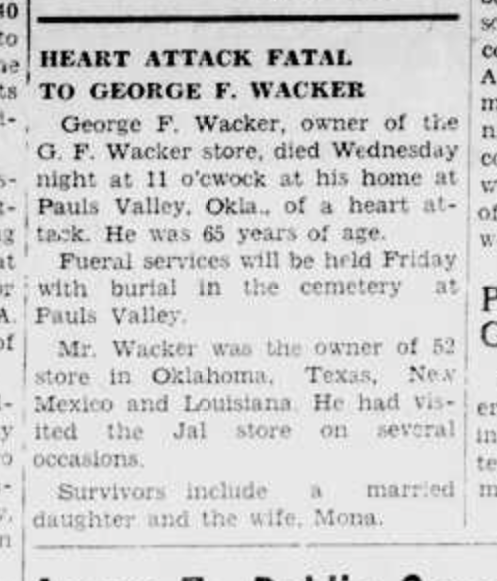
    Wacker’s stores could be found in most of the larger towns in Lea County, usually in the central business district. The stores were named for G. F. Wacker of Oklahoma. He had been working at a dry goods store in Ballinger, Texas and had the vision to start his own store selling low priced goods.

    Wacker resigned his position in Ballinger in 1917 and went back to his home town of Ellinger, Texas where he secured a small loan and bought the inventory of a bankrupt variety store. He opened his first store in Hugo, Oklahoma. This was the start of a chain of retail stores. After the modest success of his first outlet, George Wacker, his brother Hugo Wacker and some other friends opened four more stores in Oklahoma. To this, they set up the company headquarters in Pauls Valley, Oklahoma in the early 1920s. Eventually their holdings included several hundred retail stores. At their peak, Wacker’s consisted of more than 200 stores in at least five states.

    George Wacker died in 1950. The stores continued on for a number of years under successor ownership. Sometimes when companies merge or go out of business, there is more of a trail, but so far we have round nothing on how this business was finally wound up.

    George Wacker’s death notice:

    Jal Record, Jal, New Mexico, 9 Feb 1950
  • Seligman County?

    There has long been a rivalry between Hobbs and Lovington, and in 1931 there was a move to subdivide Lea county into two counties, one retaining the name Lea and another called Seligman. The Albuquerque Journal issue of February 27, 1931 carried an article with these headings “Would Divide County To Honor Arthur – Hobbs and New Hobbs Have Plan for ‘Seligman County,’ Using Court House In Common.”

    The Associated Press article went on to say that the people of Hobbs wanted to preserve the “posterity” of Governor Arthur Seligman by splitting Lea County in half and creating one named for the Governor. A proposal to approve this change was introduced to the New Mexico senate by Senator Taylor Julien. New Hobbs still existed at that time but the older town of Hobbs would serve as the county seat.

    Two weeks later, the Roswell Daily Record issue of March 11, 1931 carried these sarcastic comments: “Seligman county has been killed. There never was any excuse for creation of two counties in Lea county. In fact, there is hardly any excuse for one county. But creating a new county would have meant additional offices and that seems to have been the only excuse for it.”

    Arthur Seligman was governor of New Mexico from 1931 until his death in 1933. He was preceded by Richard C. Dillon and succeeded by Andrew Hockenhull.

  • Pooch Saves Baby

    On January 26 at 3 o’clock, Marilyn Janet Justis, 2, was playing in her yard with Mr. K. B. Walker’s dog, Pooch. A few minutes later she wandered away and fell into an empty cess pool. Pooch howled and danced around the mouth of the hole until he attracted the attention of Marilyn’s mother, Mrs. D. W. Justis.

    With the help of a man who happened to be passing, Mrs. Justis rescued her daughter from the cess pool.

    [Jal Flare, Jal, New Mexico. 6 Feb 1947.]

    [Note: Marilyn Janet Justis was the granddaughter of Charles W. Justis, one of the earliest residents of the area around Jal and usually considered to be the founder of Jal.]

  • Max Evans

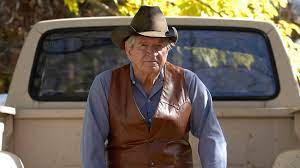
    Max Allen Evans was born August 29, 1924 to Walter Burnace (W. B) Evans (1900-1979) and Hazel Glenn Swafford Evans (1904-1994) in Ropesville, Hockley County in Texas. Max was one of two children and had a younger sister named Glenda Rhue. Max grew up in the Panhandle of Texas and southeastern New Mexico and drew on his varied experiences and his knowledge of the culture to write over four dozen books, several of which were made into feature films.

    Max grew up in Humble City and remembered doing errands and making delivery rounds on horseback as far as Lovington and smaller communities. His family moved there in the late 1920s. His father was farming and is said to have drilled one of the first irrigation wells for farming in the area. He grew potatoes, watermelons, strawberries and other vegetables. His father is said to have organized the township of Humble City. W. B. also organized a small school district and built a two room school house there, which Max attended though the third or fourth grade. W. B. also set up the first post office and Max’s mother Hazel served as Humble City’s first postmistress.

    Max remembered living through the Great Depression there in Humble City and the difficulties his and other families experienced just getting through it and keeping their families fed. The Evans lived in Humble City for seven years in all.

    Max tried his hand at ranching up in Union County in far northeastern New Mexico. He joined the United States Army in World War II and is said to have participated in the D Day landing on Omaha Beach in Normandy, France. After his return from the war, he did some painting before he turned full time to writing. Max married and lived several more places, including Taos, before settling in Albuquerque around 1967.

    This is a partial list of his fiction books:

    •   Southwest Wind (1958)
    •    Long John Dunn of Taos (1959)
    •    The Hi Lo Country (1962)
    •    The Rounders (1965)
    •    Shadow of Thunder (1969)
    •    My Pardner (1972)
    •    Bobby Jack Smith, You Dirty Coward! (1974)
    •    One-Eyed Sky (1974)
    •    The White Shadow (1977)
    •    The Mountain of Gold (1983)
    •    The Great Wedding (1983)
    •    Bluefeather Fellini (1993)
    •    Faraway Blue (1999)
    •    Now and Forever (2003)
    •    War and Music (2009)
    •    The King of Taos (2020)

    This is a partial list of his nonfiction books:

    • Sam Peckinpah, Master of Violence (1972)
    • This Chosen Place (1997)
    • Albuquerque (2000)
    • Madam Millie (2002)
    • Hi Lo Country: Under the One-Eyed Sky (2004)
    • Making a Hand (2005)
    • For the Love of a Horse (2007)
    • Goin’ Crazy with Sam Peckinpah and All Our Friends (2014)

    Three of Evans’ works were made into feature films including The Rounders, The Wheel and The Hi-Lo Country. The Rounders was also made into a television series. Seventeen episodes were filmed in 1966 and 1967. Max was also cast as an actor in the Peckinpah film, The Ballad of Cable Hogue. His book, Sam Peckinpah, Master of Violence is about the making of that film.

    For a number of years, a rodeo and celebration was held in Hobbs and was known as the High Lonesome Stampede (or Estampeda). The 1967 celebration was the ninth of its kind and one day was dedicated as “Max Evans Day” in which Max agreed to serve as parade marshall for the rodeo parade that opened up the three day affair.

    Max passed in 2020. His honors include a commendation from City of Los Angeles. He was named honorary member of board of chancellors, University of Texas. He received the Saddleman Award, Western Writers of America, 1990. In 2015, he was honored with the Edgar Lee Hewett Award in recognition of his lifetime of service to the people of New Mexico. Max also received the New Mexico Governor’s Award for Excellence in the Arts and the Spur Award for Best Short Nonfiction. He continued to write up to the year that he passed away.

    Image credit: variety.com
  • Byers and Hobbs Families

    Minnie Hobbs Byers was the daughter of James Isaac Hobbs (1852-1923) and Frances Perlee Mooring Hobbs (1857-1942). She was a twin with her sister Winnie Hobbs Dalmont and both were born March 6, 1896 when the Hobbs family was still living in Texas.

    Their parents were James Isaac Hobbs (1852-1923) and Frances Paralee Mooring Hobbs (1857-1942). Their oldest sister, Ada was about seventeen when they were born and got married later that year. There were two slightly younger siblings between Ada and the twins: Berry and Ella. The family story is that they headed west from central Texas in 1907. An uncle named Lewis D. Cain had come to New Mexico after 1900 following the death of his wife, Nancy “Nannie” Mooring Cain, sister of Mrs. James I. Hobbs, back in Texas.

    In an interview, Minnie says that their original goal had been to reach central New Mexico but they decided to stop soon after they crossed the border into the territory. Their brother Berry had made an application for a post office with the name “Taft” but it came back and was approved with the name Hobbs.

    The family of her future husband Ernest Herman Byers had come to the area by way of Houston County, Texas, though Ernest had been born in Kansas in 1882. His father Joseph Byers had passed in 1903 in Grapeland. Ernest and his sister and mother Sarah had come to New Mexico with other relatives. Minnie recounted that Ernest and his family came as far as Midland by rail and then by wagons the rest of the way. Ernest was older than Minnie, but their attraction took hold and they were married in the summer of 1912.

    Minnie’s account of their June, 1912 marriage was related in a Lovington Daily Leader interview on May 13, 1973. Minnie said that there was no minister in the immediate area, so she and Ernest rode in a buggy to Nadine where the nearest minister was located. She did not recall the name of the officiant, but remembered that the floors had just been scrubbed and were still wet when they married. The couple went on to have six children. They moved to Lovington in 1930 and their home was a landmark on 16th street.

    Minnie was active her entire life and enjoyed telling stories about the early days in Lea County. She was an artist, loved playing the violin and speaking. Ernest passed away in 1966 and Minnie survived him until her death in 1981. Both are buried in Prairie Haven Cemetery in Hobbs, New Mexico.

  • Founding of Eunice

    [Transcribed from the 60th Anniversary Collector’s Edition of the Lea County Fair and Rodeo program for the event held August 5-12, 1995]

    The early settlers to the Eunice area would have been the Daugherty brothers whose “84” Ranch headquarters was two miles east of what would become the town of Eunice. Before this time however, ex-buffalo hunters Barney and Jim Whalen claimed the area in 1885 by digging a well. They sold their water rights to Daugherty in 1886, and the 84 Ranch eventually became part of the Cowden Cattle Company of Midland.

    In 1908 John N. Carson of Shafter Lake, Texas came to the area and plowed a furrow around his homestead to make a claim. In 1909, Carson brought his family from Shater Lake and built a home and store. When Carson applied for post office for the area, he listed his daughter’s name, Eunice, at the bottom of the list. In 1909 he received approval along with the name “Eunice” for his post office.

    According to historical accounts, the Carson home was a two room and shed house constructed of lumber hauled in from Midland. The general store and post office was also built from lumber. W. S. Marshall carried the mail free of charge from Shafter Lake to complete the federal requirement for the post office at Eunice.

    In 1910 after raising the money for the school themselves, a one room building was completed which was on land donated by Carson and Mrs. Mat Downes. There were 23 students that first term and the teacher was Winnie Wyatt. In 1910, the teacher was Jessie Estlack who rode her mule three miles to the school.

    In 1910, the Reeders and Norton General Merchandise opened with its stock of groceries, dry goods and hardware. W. F. Turner drilled many of the water wells, established the blacksmith shop and the grist mill. Later he opened a grocery business with L. G. Warlick.

    The Carson home was the center for weekly musicals with Eunice playing the piano and Lee Downes and Marshall Drinkard playing violin while Ed Carson played the guitar and Will Grizzell played mandolin. May socials, dances, rodeos and community sings made up the social life of the small community. The school house was the center for church services and picnics. The Methodist, Baptist and Christian Church organized and met in the schoolhouse.

    To provide medical care, Eunice community leaders advertised they would provide a four room home and a Model T Ford for rounds if a doctor would relocate to their town. Dr. Wright and his large family accepted. But Eunice citizens were too healthy to provide him with enough income!

    The Eunice Plains Democrat started publication March 28, 1914.Legal notices of proved up claims kept it in business because advertising was scarce.

    In 1915, the one room school had expanded to three rooms and five teachers were hired. They included Lucille Woodward, Edith Davis Fanning, LuLu Marshall and Ruby Manning.

    The blizzard of 1918, the flu epidemic and the terrible drought dealt a hard blow to the small community as it did all the southern plains. The school year of 1922 reflected the hardship when only one teacher was needed for the students. Miss Mettie Jordan came for the 1925-26 term and related that her students ranged in age from 6 to 17.

    In 1928, Herman Carson, son of the town’s founder platted the townsite with the Carson Homestead in the center and sold lots in anticipation of a boom if oil and gas speculation continued. He proved correct when that same year the Gypsy #1 State was completed as a gas producer and in 1929 Continental brought in the first oil well in the Eunice area. By 1930 the population was 250 and a railroad spur through Eunice was being built. Oil prices fell with the great Depression, but Eunice rebounded in 1935 with renewed drilling activity. The school mushroomed and in 1934-35 financed construction of the first six brick school rooms.

    September 3, 1935 W. S. Marshall, James Nuget and Mr. Emery met to form the village government. April, 1937 Governor Tingley proclaimed Eunice a city. The little ranching community had come of age.

  • Pearl

    The settlement called Pearl was named for Pearl Stark Roberts, wife of Nathan Cornelius Roberts who settled about five miles west of Monument in what was then Eddy County. Pearl Roberts was named postmistress in 1908 and the post office was housed in a room of their small pioneer home on the Roberts Ranch. The post office operated from 1908 to 1928.

    Both Nathan and Pearl were born in Texas. Nathan was born in Killeen, Bell County, Texas on February 24, 1868 to Nathan Thomas Roberts (1831-1909) and Sarah M. Jeffries Roberts (1836-1905). Pearl was born in McCullough County on June 4, 1877 to Presley Summerfield Stark (1840-1929) and Martha Jane Combs Stark (1844-1915). Nathan and Pearl had at least seven children: Vernon C Roberts, Alton Lynn Roberts, Nathan T. Roberts, Stella Rosalie Roberts Peters, James Dean Roberts, Presley Stark Roberts and Alba Pearl Roberts.

    Their property included a terrain feature called Pearl Valley that was described as a wide, shallow depression beginning a few miles west of Monument and running west for several miles. There is still a road named Pearl Valley Road after this feature. Nathan and Pearl moved to the area in 1902 and homesteaded when it became possible. They operated their ranch for many years. Nathan died in 1942 at the age of 74 and Pearl followed him in death in 1965 at the age of 87. Both are buried in Monument Cemetery.

    Image credit – Lea County Traditions, Summer 2010 issue.