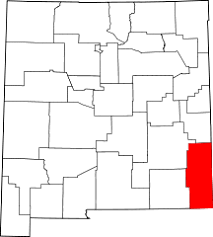
Old Lea County, N.M.

Category: history

  • The Cowden Family

    Four brothers, W. H. “Bill” Cowden, George Cowden, John M. Cowden and Buck Cowden came to the area in the mid 1880s and settled with their wives and children near what became the town of Jal. The men drove their combined cattle while the women drove wagons. Water sources were found by digging wells. Their ranch was called the Mule Shoe Ranch and had its headquarters at what became the Jal town site.

    Their father was William Hamby Cowden (1826-1903). According to federal census records, in 1850, he was twenty-five years old, living in Alabama. By 1860, he was thirty-five years old, living in Palo Pinto, Texas. That same year, he married Caroline Martha Liddon (1832-1879). During the Civil War, he served in Company A of the Frontier Battalion under Captain William C. Clayton. Though it was considered part of the Confederate Army, it essentially served as a local militia, protecting settlers primarily from the native tribes. To the best of our knowledge, it never left the state of Texas. Cowden enlisted in September 1865 for an initial period of six months and during the time of his service, he rose to the rank of sergeant.

    William Hamby Cowden and Caroline Martha Liddon Cowden had a number of children, including Bill, George, John and Buck Cowden. Caroline, known as Carrie, passed away in Palo Pinto in 1879 at the age of 47. The following year, William Hamby Cowden married her sister, Catherine Cobb “Kittie” Liddon Moore who had recently become a widow after the death of her first husband, Robert Young Moore, back in Tennessee in 1876. Kittie and Robert had been married a number of years and had several children including Hattie Lucille Moore, who would become the wife of Ambrose Quincy Cooper of Jal, and Lillie Parham Moore, who would become the wife of John Motherwell Cowden. Though it is not as complicated as it might sound, when Kittie Liddon Moore married William Hamby Cowden, Lillie’s mother became her mother in law. William Hamby Cowden and Kittie do not seem to have lived in New Mexico, but eventually resided in Midland, where they were living when they both passed away.

    Bill, George, John and Buck all were married and lived in the Jal area at least for a while before moving away, but their property was conveyed to Walter C. Cochran and others and eventually became the core of the town of Jal. Hattie Lucille Moore Cooper mentioned in a newspaper article that Walter C. Cochran became her brother in law. Mr. Cochran married yet another sister of Lillie and Hattie Lucille named Nannie Dodson Moore.
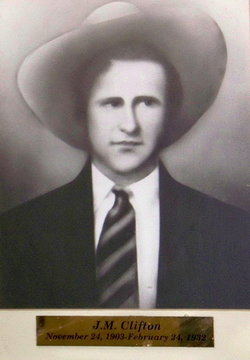
  • Deputy Sheriff J. M. Clifton (1903-1932)

    The Hobbs Flare (Hobbs, NM) of June 19, 1959 carried a column called “News of Yesteryears.” That day, the column quoted an out of print newspaper called the Lovington Tribune from February 26, 1932 and read as follows:

    “Deputy sheriff and two men were killed in a gunfight at Crossroads. The late Bob Beverly was sheriff. J. M. Clifton, stationed at Tatum was searching for robbers of Dean Hardware in Lovington and saw two men in a car at Crossroads. He went to question them, and one drew a gun, shot him in the left arm and stomach. After Clifton was shot, he was able to draw his own gun and kill both men. He then drove to Crossroads where he was taken by plane to Lubbock, Texas, dying enroute. The two men were John O’Dell and Walter Carlock. Odell was from Hobbs and Carlock from Oklahoma. Mr and Mrs. Bob Dow of Lovington were returning home from Clovis and came up on the shooting.

    Afterwards there was recovered from one of the men a watch belonging to M. P. Elsey of Corpus Christi. The news story went on to say the car was stolen.”

    Deputy Clifton had died on February 24. An aircraft had been summoned from Roswell to take him to Lubbock for emergency medical treatment, but the pilot said that the deputy had passed away about forty minutes into the flight near the Texas-New Mexico line. The incident had occurred at the community of Crossroads, about fifteen miles north of Tatum. Deputy Clifton had been badly wounded but an Albuquerque Journal article from the following day had said that he had been able to tell authorities about the incident.

    In the 1932 article, the deceased suspects were listed as Walter Carlocke of Healdon, Oklahoma and John O’Dell of Hobbs who were believed to have robbed the Lea County Hardware store. Quoting Lea County Sheriff Bob Beverly, the article continued to say that Carlocke was wanted for robbing a bank at Waurika, Oklahoma and O’Dell was believed to have been an escapee from an Oklahoma penitentiary.

    Further details included the account of an unnamed rancher who heard the shooting and ran to the location, finding Clifton barely conscious and the two suspects deceased in their car. The rancher said that Clifton had given him a brief account before he was taken to Tatum, placed in an airplane to be rushed to medical treatment in Lubbock. The suspects were apparently not involved in the hardware store robbery, as no items stolen (firearms, ammunition, knives and other articles valued at between $500 and $700) were found in the vehicle. The search continued for the robbers.

    Image credit: findagrave.com

    Officer Clifton was about 28 years old when he died. He was survived by his wife and children and was buried in Tatum Cemetery. Some of the account differs from our telling of the story, which is mostly taken from Lea County newspaper articles from 1932, but this is Deputy Clifton’s page on Officer Down Memorial Page.

  • The Knowles Family

    Benjamin Lewis Knowles was born in 1834 in Hardeman County, Tennessee to Samuel Lihu Knowles (1797-1887) and Elizabeth Providence Johnson Knowles (1796-1852). He married Mary Hulda Kellogg on December 23, 1852 in Mississippi. Ben served in the Mississipi State Infantry during the Civil War. Over the next twenty-some years the couple had at least ten children, most of whom were born in Mississippi. By the time the 1870 census was taken, the family had moved further west and were living in Washington County, Texas near Brenham. Ben’s occupation was listed as farmer. In 1880 per the census, they were living in Burleson County in central Texas. Benjamin was in his mid to upper 40s. Moving forward to 1890, they had moved to what was likely their last residence in Texas and were living in rural Mills County, still in central Texas. Ben’s age was listed as 66.

    A few short years later in 1903, the family moved to Lea County, just under ten miles north of Hobbs when Ben was about 70 and Mary was about the same age. Ben built a simple adobe structure with two rooms and a dog walk or breezeway separating them, a common layout for residences, including wooden houses, of that time. Ben ran a mercantile store and made a successful application for a post office. Around them sprang up a few businesses, including more stores, a school, a blacksmith shop and others. It is estimated that the community, once known as Oasis and longer as Knowles, might have had as many as 500 residents including his son Ruben Benjamin Knowles and his large family who had moved to the area with Benjamin and Mary.

    Mary died in 1907 and is buried there in Knowles. Ben lived to the age of about 91 and died in Wier, Williamson County, Texas while visiting family members. He is believed to have been interred in Texas, but there is no known headstone or grave marker. Ruben lived to be 101 years old and remained in Lea County most of his life. His wife, the former Mary Elizabeth Scrivner, had died in her mid 50s back in 1921. Ruben survived her another forty-plus years and both of them are buried at Woodbine Cemetery in Artesia.

    Benjamin Lewis Knowles was born in 1834 in Hardeman County, Tennessee to Samuel Lihu Knowles (1797-1887) and Elizabeth Providence Johnson Knowles (1796-1852). He married Mary Hulda Kellogg on December 23, 1852 in Mississippi. Ben served in the Mississipi State Infantry during the Civil War. Over the next twenty-some years the couple had at least ten children, most of whom were born in Mississippi. By the time the 1870 census was taken, the family had moved further west and were living in Washington County, Texas near Brenham. Ben’s occupation was listed as farmer. In 1880 per the census, they were living in Burleson County in central Texas. Benjamin was in his mid to upper 40s. Moving forward to 1890, they had moved to what was likely their last residence in Texas and were living in rural Mills County, still in central Texas. Ben’s age was listed as 66.

    A few short years later in 1903, the family moved to Lea County, just under ten miles north of Hobbs when Ben was about 70 and Mary was about the same age. Ben built a simple adobe structure with two rooms and a dog walk or breezeway separating them, a common layout for residences, including wooden houses, of that time. Ben ran a mercantile store and made a successful application for a post office. Around them sprang up a few businesses, including more stores, a school, a blacksmith shop and others. It is estimated that the community, once known as Oasis and longer as Knowles, might have had as many as 500 residents including his son Ruben Benjamin Knowles and his large family who had moved to the area with Benjamin and Mary.

    Mary died in 1907 and is buried there in Knowles. Ben lived to the age of about 91 and died in Wier, Williamson County, Texas while visiting family members. He is believed to have been interred in Texas, but there is no known headstone or grave marker. Ruben lived to be 101 years old and remained in Lea County most of his life. His wife, the former Mary Elizabeth Scrivner, had died in her mid 50s back in 1921. Ruben survived her another forty-plus years and both of them are buried at Woodbine Cemetery in Artesia.

    Oil was discovered near Hobbs in the 1920s which led to the decline of Knowles as an active community as people were drawn to Hobbs and other towns in the county.

  • Oil Discovery In Hobbs

    The first successful oil well was completed around 1921 and the first successful gas well was completed a year earlier, but the Midwest State No. 1, spudded in 1927 using a standard cable tool rig and found oil on June 13, 1928 at a depth of 4,065 feet is considered to be the well that revealed the huge oil deposits in this area.

    Writers have commented that the flat land surface disguised the formations below the surface. Surface formations may sometimes indicate favorable subsurface formations for petroleum products.

    Midwest Refining Company, which would later become part of Amoco and subsequently British Petroleum, had brought in a successful well near Shiprock some six years earlier in 1922 in what is now called the San Juan Basin. In the Permian Basin, oil was found in nearby Winkler County, Texas in the Scarborough Field. In an oversimplication of all the various split ups and mergers, Midwest had been operating under the name Midwest Refining Company since 1914 after a merger between Midwest Petroleum and Franco Petroleum and Amoco was created in 1911 after the federal government ordered the split up of Standard Oil Company.

    The Midwest State No. 1 was drilled using a steel derrick that came from Amarillo. The engine was rebuilt locally after a fire had occurred when the rig had reached a depth of about 1,500 feet. Exhaust from the Franklin 85 engine created a fire that involved the engine house. The cable tools were fished from the hole, repairs were made and drilling resumed.

    The first signs of oil came at just below 4,000 feet in June and the well was later completed in November, 1928 at a depth of 4,330 feet. The Las Vegas Daily Optic reported on June 15, 1928:

    “The Midwest State No. 1 well, sec 9-19-38, is standing 4000 feet in oil and promises to open a new field, C. B. Barker, attorney for the state land commissioner was advised today. ‘This is on land belonging to the state deaf, dumb and blind schools and may mean a large income for them,’ said Mr. Barker. ‘Another section of common school land adjoins this one.’”

    Early production was measured at 700 barrels of oil per day, but it promised more and greater finds in the Hobbs area. One year later, the Humble Bowers No. 1 was completed. By comparison, its production was estimated to have a potential of 10,000 barrels per day.

    Cable tool drilling is considered to be one of the earliest drilling methods, dating back thousands of years over the world for other applications, such as drilling water wells. Drilling is accomplished by percussion, repeatedly lifting and dropping a string of pipe and tools into the hole. Fluid is pumped into the hole and crushed material is pumped out. Early drilling equipment included the drill bit, the drill stem, drilling jaws, a socket and steel cable. It is still in limited use for other applications but has been replaced by more advanced methods for deeper wells.

    [Sources: American Oil and Gas Historical Society.]

  • Joe Cooper Recalls Youth In Jal Area

    Memories of the days when he first came to Lea County were revived by The Jal Flare‘s special edition in Joe Cooper, who lives ten miles north of Jal.

    He came here in ’10 from Pyote, Texas with his parents, Mr. and Mrs. James M. Cooper, and has lived in this area for the last twenty-eight years.

    When they first arrived, they had to haul water six or seven miles, Mr. Cooper recalled, from what is known as the west wells (now Jal). But the four boys and the father soon had a house built and a well drilled.

    “Those were rough days,” Mr. Cooper said, “but still they were the sweetest of my childhood. I couldn’t see it then, but now I can realize it.”

    When the time came to drive the look back through the years and and stock to water, it fell to Joe’s lot to climb aboard the burrow and round them up. It usually took him all day, since the horses were wild.

    Sickness of two of his brothers also threw a hardship on Joe during those early days, as there was a great deal of work to be done.

    [Jal Flare, Jal, NM. 30 Mar 1939.]

  • “New Town” For Lea County, 1934

    New Town To Appear On Lea County Map

    Lea County is to have its “Eldorado.” A new town by that name would open up, beginning Tuesday, July 24, projected by L. A. Daniel, who first put Hobbs on the map.

    “Eldorado is located on the railroad and highway, 16 miles south of Eunice, 8 miles north of Jal, 1 1/2 miles east of the Cooper postoffice.”

    [Hobbs News, Hobbs, NM. 27 Jul 1934.]

  • Oil Discovery in Jal

    On March 7, 1939, the Jal Flare contained an article that recounted the first oil wells in the area. The first discovery well was a wildcat, the Rhodes #1. Drilled in 1927 by Donley Brothers it produced a gas and sweet oil well that flowed mostly gas and some oil. It was quickly followed by Continental Oil Comapny’s Eaves well, south of town and the Shoals wells. Skelly then struck oil on the Joiner lease.

    This led to a boom and Jal grew in response. Drilling activity declined over the next few years and population declined until there was another boom of sorts beginning in 1936, when Roy Stovall and Culbertson and Irwin brought in a well in the Jal Sand Area. A dry hole by Phillips was followed by this offset well. The article described the pays on the east side of town as being in sand and on the west being in limestone.

    The article concluded by commenting that the discovery of oil was expected to lead to continued growth as surrounding exploratory wells are drilled.

  • William Standifer Williams and Minnie Alice Anderson Williams

    William Standifer Williams was born in the early 1860s in Chattanooga, Tennessee to Samuel Lowry Williams (1807-1898) and Katuriah Taylor Williams (1825-1893), a farming family. His father was one of the earliest Anglo residents of that area and is known as the Father of Chattanooga. William was one of the youngest of some thirteen siblings and half siblings. Some accounts give William’s year of birth as 1861 and others show it to be as late as 1864. William lived with his large family until at least 1880. The actual date of their marriage is unknown, but William married Minnie Alice Anderson of Sabine County, Texas prior to 1900. The couple resided for a number of years in Indian Territory, now Oklahoma. William is said to have traveled to what was then Chaves County, New Mexico Territory in 1898 and began to acquire land but returned to his cattle operation in the Oklahoma Territory with his wife. They were still living in Indian Territory in 1900 when their first child was born. Two more children were born there and after the third, George Howell Williams, was born, they came by wagon in 1907 to William’s property and officially homesteaded in New Mexico on property located just east of the Caprock and roughly sixteen miles west of Lovington. The location was near a water source known as Old Cedar Lake. It was water, but was once described as “gippy” by a descendant. Cedar Lake was a landmark in the area, however.

    William and Minnie operated their cattle ranch for the next thirty-eight years until William’s death in 1936. It was known as the Plains Cattle and Sheep Company and at one point amounted to at least 275 sections of land. The ranch headquarters had initially consisted of a dugout residence but most of the time, the family resided in Artesia. Williams was often referred to in the local newspapers in connection with his cattle operation. Williams acquired the nickname “Colonel” reportedly from his stately stature while astride his horse, but he is not known to have served in the military. The ranch was on the western side of Lea County when it was created out of Eddy and Chaves counties in 1917.

    William was nominated for the Lea County Cowboy Hall of Fame for a number of years and was inducted into the organization in 1992. Comments about Williams included mention that his ranch headquarters was always a welcome stop for freighters passing through the area and that Mr. Williams was known to be a mentor to younger ranchers in the area.

    Mr. Williams died in 1936. Mrs. Williams survived him until 1956. Both are interred in Woodbine Cemetery in Artesia. After Mr. Williams’ death, the ranch was divided among the couple’s children.


  • Pioneer Woman Tells of First Days of Jal

    Mrs. A. Q. Cooper First Saw Site of Jal in Eighties

    Mrs. Cooper first visited Jal at the age of eleven. She came from Palo Pinto. She later went to Chattanooga, Tennessee to attend school. After marrying Mr. A. Q. Cooper in Midland, Texas she moved to Jal in 1896 to make her home.

    Mrs. Cooper is a sister-in-law to Mr. W. C. Cochran, founder of Jal. It was on his Bar-Two Mule Shoe ranch that the townsite of Jal was founded.

    From the Memories of a Real Old Timer

    My first visit to these parts dates back to the eighties. In fact, I believe it was the year of 1889. My sister and her husband, John M. Cowden and his two older brothers, Billie and George, who were also my step brothers, had come out several years previous and brought their small bunch of cattle and established a temporary camp at the northwest edge of the White Sands. They turned the cattle loose as there was plenty for them to eat on the hard flats and they could get an abundance of water by merely trampling around on the sand and waiting for the water to rise.

    They remained there only a short time while they were looking for a better place. They finally settled on the present site of upper Jal and there established their first homes. These homes were dugouts, covered with tents. It was about this time that they bought the J. A. L. brand from L. A. Lynch. From that time on that part of the draw has been known as the Jal Draw.

    At this time there were still a few buffalo in the country and on one occasion when the three women and a visiting woman were at the ranch alone with us children, we spied five buffalo coming over the hill. The visiting woman took down the old buffalo gun and shot. The gun went off accidentally and hit one of them. She took aim and fired again. Two buffalo fell. There we were with two dead buffalo and just four lone women. Then as luck would have it, the boys came in unexpectedly that night in time to skin and hang the buffalo. This was my only experience in eating buffalo meat. Another amusing, but at the time tragic, incident of the time occurred when two of the milk cows licking salt from a tub near one of the tents hooked one another and one of them fell through the tent on a bed in the dugout on which lay a sleeping baby. With much bucking and plunging, which almost wrecked the domicile and with some help from us the cow finally got out.

    To the best of my memory at that time there were only three or four other ranches in this vicinity. Namely, the Half Circle Two’s, owned by Fred and Dock Cowden, cousins of the aforementioned Cowden brothers. This ranch was located near Custer Mountain west of the present town site of Jal. (text missing) the present town site of Jal, (text missing) at that time being the Bar Two Mule Shoe ranch, owned and established by W. C. Cochran, who later became my brother-in-law. Other ranchers north were W. C. Divers and Bill Holloway. All of these ranchmen except Holloway came to this country from Palo Pinto.

    This is a brief outline of the history of this country and its settlers preceding the time when I came here with my husband, A. Q. Cooper and two small children, to make my home at the Bar Two Mule Shoe (what is now the town called Jal) about the year of 1896. This does not purport to be authentic as to dates as I made no record of such.

    The following incidents are of no importance to the history of this country, but may be interesting for you to know.

    Many people have wondered about the origination of the name Son-of-a-Gun which has long been applied to a cowboy stew. I know of the origin of this name for I hear my brother tell the story and he was present at the time. My brother was working for the Hat Wagon once and the cook prepared a dish which they all called Cowboy Stew. Some visiting cattle buyers asked the name and when the cook told them, one of them said, “I don’t know any better name for it, but it’s a son-of-a-gun of a good dish.” Thus was the name originated.

    One of my most impressive memories is of remarks made by the three women who pioneered this land. Mesdames Billy, George and John M. Cowden, when they admitted that their beautiful homes built in Midland, Texas years later held no thrill for them like the little one room plank houses which replaced the dugouts on the old Jal Draw.

    No stretch of the imagination could have pictured to me the Jal of today from my old home site under the hackberry trees which was then the headquarters of the Mule Shoe Ranch. (Editorial note: The headquarters spoken of above were on the site of what is now Hubbs and Justice.)

    [Jal Flare, Jal, NM. 20 Aug 1938.]

  • Creation of Lea County

    Governor Lindsey has affixed his signature to the Lea County bill, which creates the twenty-eighth county in New Mexico.

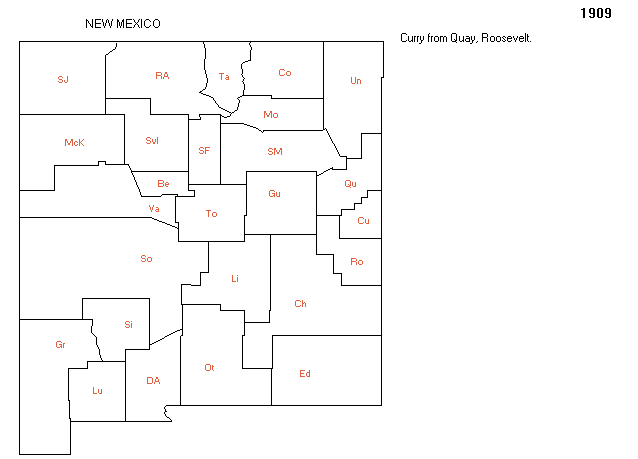
    Lea county takes a strip off the eastern side of Eddy county, also a big piece from the southeast part of Chaves county and will have an assessed valueation of about $6,000.00. Lovington is named as the county-seat.
    [House Pioneer News, House NM. 16 Jan 1917.]


    Lea County Bill Passed By Senators.

    Santa Fe, March 5. – Lea County is almost as good as organized. The house bill providing for its establishment ws passed by the senate today without amendment.

    The bill is now ready for the signature of Governor Lindsey, and it is believed that the governor will sign it without delay. Lea will be the twenty-eighth county in New Mexico and the second to be established by the third state legislature, de Baca being the other. Lea county bill was not passed until after a hard fight. More than an hour of the time of the senate was consumed in consideration of the various amendments proposed ot the bill and in the discussion that followed the that “do now pass.” Senator Gallegos, chairman of the committee on private, county and municipal corporations, led the fight for the passage of the bill, while Senator Isaac Barth and Senator Skeen were most vigorous in opposition to it.

    It was evident that the word had been passed out that the new county should be created. The only hope of the opponents of the bill was to amend it and in that way there was a chance that amendments might not be concurred in by the house and that the bill would be lost in the eleventh hour rush.

    The advocates of the bill, however, were well organized, and one amendment after another was voted down, the count being in all cases 14 to 8 in favor of the motion to table the proposed amendment. One amendment proposed to leave the creation of the new county to a referendum vote of the people of the territory affected and on this amendment Senator Barth made his most strenuous stand.

    It was apparent that Mr. Barth was back in his old time form. With only a few days left of the session and no opportunity for hearing of the contest against him instituted by W. H. Chrisman the Bernalillo county senator seemed to feel that the shackles had been stricken from his fettered limbs and that he was a free man once more. He acted just like he used to act.

    Senator Barth charged the republican majority with playing politics in the creation of democratic counties. He acknowledged that all during the session the republicans have been courteous and considerate of the rights of the minority and lamented that such was to be the case no more. He warned the republicans that they were on a cold trail in their fell designs and declared that the only effect of stirring up dissension among Pecos Valley democrats would be to bring on more democrats in the general election.

    On the final showdown, all the republican senators voted in favor of the bill, while three democrats, Senators Calisheh, Lea and Heratelder, voted with them. The seven adverse votes were cast by the democrats – Roswell News [Lovington Leader, Lovington, NM, 9 Mar 1917.]


    As of 1909 – (Source unknown)

    Before and After creation of Lea County:

    As of 1917 – Image credit familysearch.org