Old Lea County, N.M.

Category: smaller communities

  • McDonald

    McDonald was the name given to the community located about thirteen miles north of Lovington. It was founded around 1912 and given the name of the first state governor of New Mexico, William C. McDonald of Lincoln County, who served in that capacity from 1912 to 1917. It had its own post office from 1912 to 1941.(1) The first postmistress was Mirtlelee Autry.(2)

    In addition to the post office, the community also once included a grocery store, a combination grocery and dry goods store and even briefly, its own newspaper.(2) Now some residences and private businesses remain near the former site. None of the original structures have survived.


    (1) Robert Julyan, “The Place Names of New Mexico,” University of New Mexico Press, 1998.

    (2) Lynn C. Mauldin, “Lea County New Mexico, A Pictorial History,” Downing Company Publishers, 1997.
  • Knowles

    Benjamin Lewis “Ben” Knowles came to the area about 1903 or 1904 from Mills County, Texas and claimed land. In and around it grew up a settlement that is believed to be the second oldest (after Monument) in the area that later became Lea County in 1917. Knowles was in his late 60s when he came to New Mexico and his wife Mary Hulda was a few years younger. Mrs. Knowles died in 1907 and Mrs. Knowles survived her until 1925 when he died on a trip to visit relatives in central Texas. The town was not more than about five miles west of the Texas border. According to “Place Names of New Mexico” it went by the name Oasis, at least for a while. At its peak is believed to have had as many as 500 residents. It had at one time several stores, a bank, hotel, newspaper office, wagon yard and other businesses.

    Knowles had its own post office from 1903 to 1944. Once oil was discovered in Hobbs in the late 1920s the residents began to drift away in favor of Hobbs and New Hobbs to the south and Lovington to the north. There was some mention of a fire in the town at some point. Whatever the reasons, none of the original buildings are thought to still survive.

  • Humble City

    The community of Humble City is located about five miles northwest of the edge of Hobbs on Highway 18 at the intersection with West Alabama Street. It took its name from the Humble Oil and Refining Company. Humble Oil was founded in 1911 in Harris County, Texas and also gave its name to the town of Humble, Texas, northeast of Houston.

    Standard Oil of New Jersey acquired a one half interest in Humble in 1919 and the brand completely disappeared in 1959 after Standard Oil bought the other half in a merger that gave rise to Exxon (now Exxon Mobil).

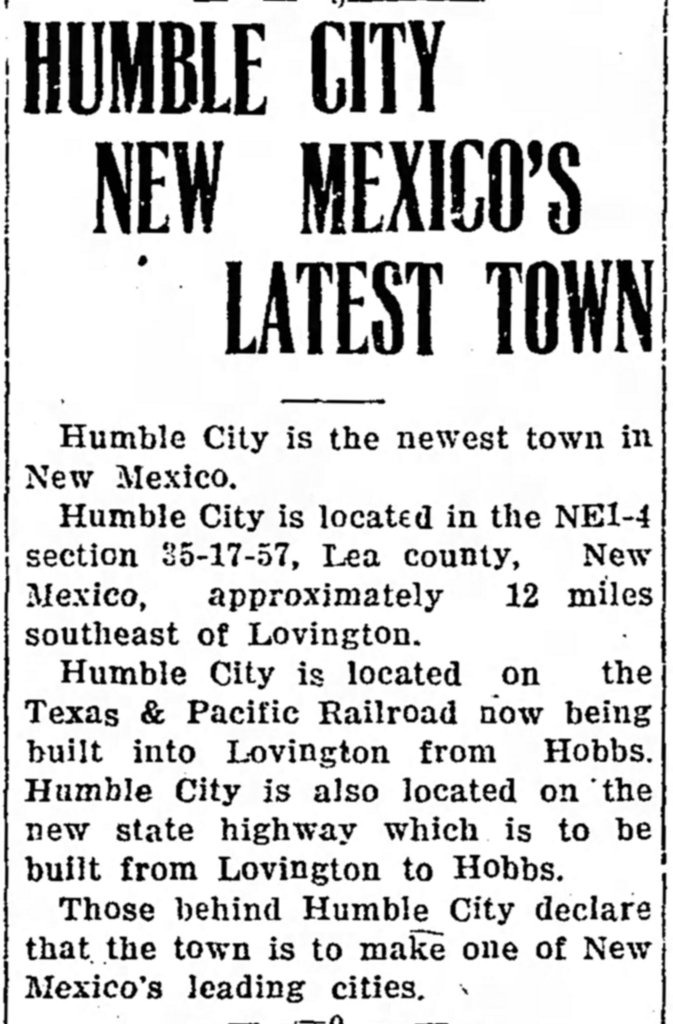
    Humble oil company did a good bit of exploration in the early days of the Hobbs oilfield. Humble City was founded about 1930 and had a post office for about 46 years.

    Roswell Daily Record, May 31, 1930

    Humble City did not blossom as much as the article had predicted, but it is still on the map.

  • Caprock

    The community of Caprock is located just inside the northwestern border of the county. It takes its name for the geological formation that is found in southeastern New Mexico where to the east, the surface is flat while to the west it drops off rapidly. West of Caprock, the surface descends to the Pecos river. Caprock is located just under 25 miles northwest of Tatum and 47 miles roughly due east of Roswell on Highway 380.

    Charles E. “Ed” Crossland is credited for having founded the settlement in 1913 and serving as its first postmaster. (1) The 1920 census showed Crossland, his wife Lillian and son Ed, Jr. living there and his profession was listed as farmer. In 1930 Crossland and his family still resided there and his profession was listed as being a teamster for the state highway department while Ed. Jr. listed his as being a wheat farmer. Charles passed away in 1948 in Roswell at the age of 67 and is buried at South Park Cemetery. His wife Lillian survived him over thirty years, remarried and died in California. Ed Crossland Jr. remained in the Roswell area where he lived with his family.


    “The cap, or hard layer, underlying the Llano Estacado is a major geological feature known as the Caprock. It is not a rock layer in the usual sense of the term but is more technically a “hard-pan” layer that developed a few feet below the ground as highly mineral subsoil particles cemented themselves together to form a rock-like layer that resists erosion. Although the name Caprock technically applies only to the formation itself, the expression is often loosely used to mean the whole Llano Estacado. The Caprock escarpment was formed by erosion about one million to two million years ago.” (Excerpt from https://www.tshaonline.org/handbook/entries/caprock)


    (1) Julyan, Robert, “The Place Names of New Mexico,” University of New Mexico Press, 1998.

  • Buckeye

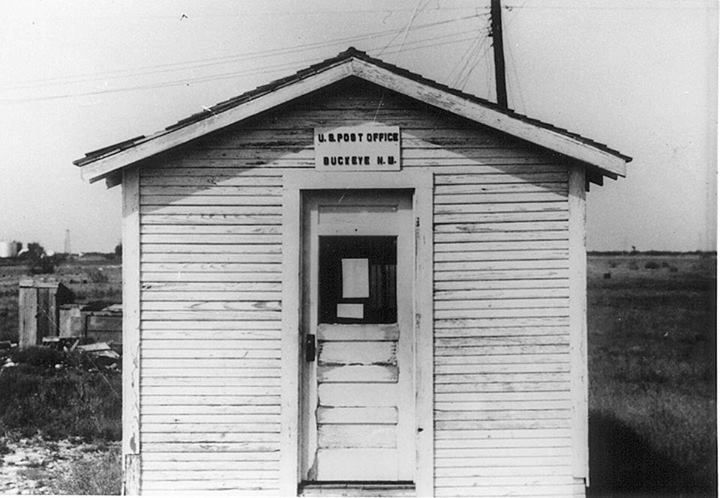
    According to most sources, Buckeye grew up as the oilfield business increased. It was named for the Buckeye Sheep Ranch which was located in the area. At various times, it included a grocery store, as many as two gas stations, a cafe, welding shops, a hardware store and post office. (1)

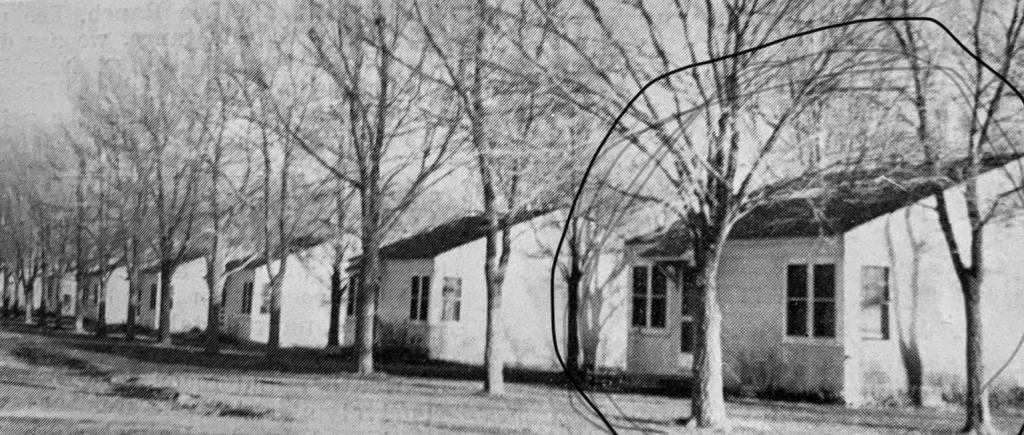
    In addition to the ranches, primarily the Lee, Eidson and Scharbauer ranches, there were a number of production camps including Phillips and Texaco, a large gasoline plant built by Phillips along with housing. The area also included a school at one time, and a Baptist church.

    Below are some images of Buckeye as it probably looked in the 1950s and 1960s.

    Undated Photo of Buckeye
    Undated photo of Buckeye
    Post office built by Jake Walters
    Phillips gasoline plant housing

    (1) Lynn C. Mauldin, Lea County New Mexico, A Pictorial History, The Donning Company, 1997.