Old Lea County, N.M.

Category: history

  • The Causey Brothers

    The Causey brothers were formerly buffalo hunters. The big lumbering buffalo were hunted in the southwest to the point where they declined from a peak of over 100 million animals to near extinction in only a few decades during the late 1800s.

    Likely the best known Causey brother went by George Causey, though his given name was Thomas Leander Causey. He was born in 1849 in Madison County, Illinois and died in Roosevelt County, New Mexico in 1903. How he came by the nickname of George is unknown. He was a single man most of his life. He married in 1903 but died by his own hand only a few weeks after he married.

    George was the first born of ten children to George Washington Causey and Mary Adeline Crowder Causey. The others were Mark, John Van Cleave, Eliza Jane, Mary Adeline, Charles Grant and Nellie Grant (twins), Robert Lincoln, George Washington, Jr. and Rose Evelyn. All but one or maybe two of the children were born in Illinois. George W. (the father) had been born in Tennessee and in the 1870 census, his occupation was listed as farmer and was still shown as being a farmer in the 1900 census before his death in 1907 at around 80 years of age. He died in Guthrie, Logan County, Oklahoma. Mary Adeline had predeceased him, also in Oklahoma, in 1895.

    Thomas Leander “George” Causey does not appear have served in the Civil War, although he may indeed have done so. Near the end of the war, however, he is said to have worked as a freighter hauling supplies to Army forts and trading posts in Kansas. This profession became less profitable as the railroad system expanded and goods could be transported reliably via rail.

    At some point, George began to hunt and trade in animal hides, following the buffalo herds south and west from Kansas to Oklahoma and later to Texas and New Mexico. George is reputed to be a prolific buffalo hunter, and by esimates of others is said to have killed over 40,000 of these animals, living off money he earned from selling both hides and meat.

    By around 1877, George and at least two brothers, Robert and John, had come to Yellow House Canyon, apparently near the current town of Littlefield, Texas. The brothers, George, John and Bob, came to the area in the late 1870s. They are first believed to have settled with a couple of other partners on the western side of Yellow House Draw.

    Yellow House Draw was a natural old watercourse, or stream bed, in the Llano Estacado that ran for about 150 miles originating around 20 miles south of Melrose, Roosevelt County, New Mexico all the way to near the current town of Lubbock, Lubbock County, Texas. There it ties into a fork of the Brazos River. There, still hunting for the remnants of the buffalo herds, the Causeys built an adobe house at a water hole there before exploring a bit further south into the Four Lakes area, in the northern part of what is now Lea County. They eventually settled on the southern end of the county near Monument Spring, still hunting the last of the buffalo which had been hunted until around 1880 in this area.

    By the early 1880s, the brothers had tried to make the transition to capturing and selling wild mustangs. They began by capturing 100 mustangs along with about 50 stray beef cattle after the brothers moved to what became Lea County. An early task was to look for water, which they found in the northern part of the current county. George bought an Eclipse direct stroke windmill. Their ranch is referred to as being the first ranch in Lea County. After operating there for some time, that ranch was sold and George relocated some five miles south of Lovington. He had to supply water from Monument Spring and built a rock house. Causey ran his horse and cattle operation for a number of years from that location. He also contracted to drill water wells and set windmills for other settlers.

    Around 1900, the exact date is unknown, Causey was riding a horse in a mustang roundup. The mount got spooked and fell after possibly stepping into a badger hole and breaking its leg, after which it rolled over Causey. Ranch hands came upon him two days later, sent for a wagon and brought him back to the headquarters at Four Lakes and then taking Causey on to Roswell for further medical treatment. Causey was then transported to Missouri for further treatment but never regained full health, reportedly suffering from a continuing spinal injury causing him extended pain and discomfort. Causey sold his ranch to the owners of the Hat Ranch. He and his brothers continued to operate a mustang operation on the open range in Chaves County. His employees also continued the water well drilling operation.

    Albuquerque Journal – May 30, 1903

    Causey was married to a nurse of German ancestry named Johanna Fewson on April 8, 1903 and established a ranch between Kenna and Roswell. About six weeks later on May 18, 1903, Causey is believed to have taken his own life. Witnesses heard a gun shot, ran to the room and found Causey fatally wounded. Speculation was that he was despondent over his inability to recover from injuries sustained in the riding accident. When he died, Causey was 54 years old. Funeral services were held in Roswell at the First Christian Church after which Causey was buried in Southside (now called South Park) Cemetery there. His brothers Bob and John moved away and lived until the mid 1930s. Bob is buried in Arizona and John is buried in California.


    Sources: Elvis E. Fleming’s articles in the Roswell Daily Record on George Causey. Fleming gives much credit to Gil Hinshaw’s book “Lea: New Mexico’s Last Frontier” and to Vivian H. Whitlock’s book “Cowboy Life on the Llano Estacado.” Sources also include genealogy records of the Causey family and various other newspaper articles.

  • William Rufus Shafter and the Monument

    Colonel William R. Shafter (1835-1906) was a United States Army officer in command of so called Buffalo Soldiers of the 24th United States Infantry Regiment in West Texas and the New Mexico Territory. He led troops during the Civil War as a first lieutenant in the 7th Michigan Volunteer Infantry Regiment and for his actions received the Medal of Honor. He was captured by Confederate forces during the war and was confined to a prison until his release in 1864. Thereafter, he was in service as a colonel in the 17th United States Colored Infantry, among his other postings. He continued to serve during the Spanish-American War in 1898. By then he was about 63 years old. Shafter retired in 1901 and lived in Bakersfield, California until his death in 1906.

    In the summer of 1875, Shafter was leading troops from the 10th Cavalry and 24th Infantry based in of Fort Concho. They were searching for Apaches and looking for water sources, the latter was known to be rare between the Concho and Pecos rivers. At a landmark then known as Dug Spring, believed to be located near the Texas-New Mexico border in what is now Winkler County, Texas and Lea County, New Mexico, they were attacked by a group of Apaches. Pursuing them, they came across a large spring in the New Mexico Territory.

    Shafter is said to have ordered a structure erected to help make the location easier to find on the nearly flat prairie. Gil Hinshaw quotes Shafter as writing the following about the monument (1), “Monument Spring is so named from a monument I had built on a hill southwest and 1/12 miles distant from the spring. This monument is of nearly white stone, about eight feet in diameter at the base, four at the top, and 7 1/2 feet high. It can be seen for several miles in all directions… Monument spring is a very large spring of excellent water, furnishing enough for several thousand head of horses. The country to the north is for fifty miles, hard high prairie, to the south and west sandy; grass in all directions, of luxuriant growth, of the finest quality found on the plains; wood abundant (roots) for fuel, and good building stone in the hills near by (limestone).”

    The spring was first occupied by Anglo buffalo hunters near the end of the years in which buffalo were plentiful on the plains. Eventually the community of Monument grew up nearby, thought to be the oldest Anglo community in what is now Lea County. The fate of the Shafter monument is not documented, but is thought to have either been destroyed and scattered by the native tribes or scavenged and used in the construction of early houses and other buildings by settlers. The image below is believed to be a replica of the original monument. No images of the original monument are known to exist.

    Image credit: attributed to Lubbock Avalanche-Journal

    (1) Hinshaw, Gil, “Lea, New Mexico’s Last Frontier,” Hobbs Daily News-Sun, publisher, 1976.

  • Addison “Add” Jones, Well Known Black Cowboy

    Addison “Add” Jones was born a slave in Texas. Much of what we understand about his early life was told by his wife Rosa when she furnished information for his death certificate after he died. He is thought to have been born in Gonzalez County in 1845.

    Jones worked for many years for George Washington Littlefield (1842-1920), probably only a few years older than Addison, who was former soldier in the Confederate army after which he became a rancher, banker and was known as a philanthropist. Littlefield’s father had died when he was about ten years old and he grew up on the family farm, also in the general vicinity of Gonzalez County. How Jones and Littlefield became acquainted is not documented, but they were closely associated for most of Addison’s life. Addison is believed to have worked on Littlefield ranches including the LFD, Four Lakes in Lea County and Yellow House.

    There were racially discriminatory situations that occurred throughout the southwest over these years. It is said that the Black cowboys often got the hardest and most disagreeable jobs, but in ranch life, Black cowboys were quite common, either working in all Black crews or alongside other cowboys. Addison gained a reputation for being a skilled cowboy and a hard worker. He was a leader, was known to be a good horseman and would often be the first to ride wild broncs as they began the process of being broken or tamed. He was also skilled at roping horses and served as trail boss in the Littlefield outfits. Because of his skills and endurance, Add Jones was one of the best known Black cowboys in West Texas and eastern New Mexico.

    Jones does not appear to have had much formal education, if any at all, and it has been speculated that he had limited ability to read and write. He left no personally written accounts of his life, as far as is known. He owned his own home later in life and lived in Roswell when he and his wife were older.

    According to a 1993 article in the Roswell Daily Record by Elvis Fleming, Addison and Rosa were married on December 7, 1899 in the Chaves County courthouse when he was 54 and she was 36. Rosa was originally from Texas and was working in Roswell.

    The couple was living in Roswell when he died in 1926. His obituary was carried in the March 25, 1926 issue of the Roswell Daily Record, and cited his having lived in southeastern New Mexico for forty years. It also mentioned his sunny disposition and many friendships among all people. It also related that he was a member of the Knights of Pythias and that he was a Mason. His wife Rosa followed him in death in 1933. Both are buried in South Park Cemetery in Roswell, New Mexico.

    Sources include newspaper articles, and “Black Cowboys of Texas” edited by Sara R. Massey.

  • J. T. Easley and Lorena Lee Anderson

    When this couple married in Post, Texas in the 1920s, the wedding united two families who were early settlers in the area that became Lea County. John Thomas Easley was one of eight children born to Robert Henry Easley (1864 -1928) and Rosa Belle Jones Easley (1873 – 1962). The other children included Minnie, Levie, Charlie, Blanche, Ruth, Jack and R. H., Jr. Robert Henry and Rosa lived in several locations, mostly within the current boundaries of Lea County, including Monument, Plainview, Hagerman and a few miles north of Lovington before returning to Post, Garza County, Texas where they would remain for a number of years. Robert Henry died in Littlefield in 1928 and Rosa survived him almost thirty five years before she passed away in Post.

    John Thomas was born in 1899 in Oklahoma where the family was living at the time. He grew up mostly in Post and also lived in Lovington. He and Lorena married in Post in 1921.

    Lorena was the second child born to James Smith Anderson (1873 – 1930) and Minnie Myrtle Stringer Anderson (1881 – 1967). The other children were W. A. (Bill), Preston Pond, Roy Lewis. James and Minnie also came to the area in 1906, settling on a place about four miles east of Lovington. Their property included two dry lakes at the time. The lakes eventually filled up during an extended rainy period. These later became known as Easley’s Lakes to county residents. James died in 1930 and Minnie Myrtle survived him another thirty-seven years. After James died, J. T. and Lorena moved to the county to operate the Anderson ranch and lived there for the rest of their lives.

    The couple was active in the community and the county. J. T. served on several boards and area groups including serving as County Commissioner in the 1960s and as President of the county fair board during the time when the McClure Arena was conceived and built.


    Sources include various genealogy resources, newspaper archives and Lea County Genealogical Society’s “Then and Now – Lea County Families, Volume 1” published by Waldworth Publishing Company, 1979.

  • Fire at the Buckeye Gasoline Plant

    The Lovington Daily Leader carried this headline in its August 27, 1959 issue, “Intense Blaze Burns Heater at Phillips Buckeye Refinery.” We remember being awakened early that morning and told we needed to evacuate the area because the gasoline plant across the road was on fire.

    Some event had ignited a fire at the Lee Plant that morning. We were living in the house nearest the road and there were six more houses to the north of us. Closer to the plant than our houses were several dozen houses of the plant employees who we assumed were getting the same emergency request.

    Buckeye is eighteen miles from Lovington and further than that from Hobbs, but both fire departments were called out to fight the blaze. Units from Lovington arrived a few minutes followed by elements from Hobbs just a few minutes later. Our parents quickly loaded up some clothing into our cars and drove down a half mile to the Buckeye intersection where the gas station, store and little post office were located. We all watched the fire and smoke until the blaze was safely put out and we were allowed to return to our houses.

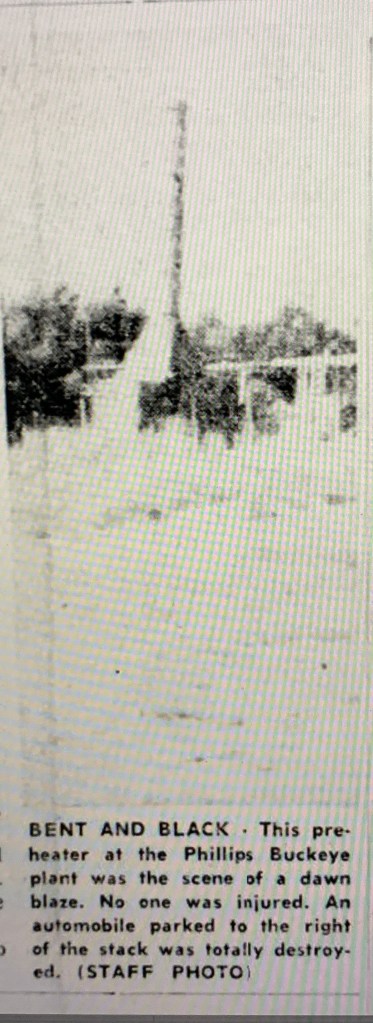
    We later learned that a piece of equipment called a pre-heater had caught fire at about 5:30 a.m. and went out about sunrise. The newspaper account said the blaze lit up the sky and could be seen over the horizon all the way to Lovington. The fire departments were able to contain the blaze within about thirty minutes after they arrived. The firefighters braved the extreme heat and danger to spray foam on the flames and extinguish the blaze. Phillips praised the firefighters for their quick work and said if it had not been for their efforts, it could have led to a much more serious situation.

    There were no known injuries and damage to the plant was confined to the pre-heater and surrounding equipment. There may have been more vehicles that were damaged, but we remember at least one passenger car having been melted down to a shell and hauled off on a flat bed truck. The photo below is from the August 27, 1959 issue of the Lovington Daily Leader.

  • McDonald

    McDonald was the name given to the community located about thirteen miles north of Lovington. It was founded around 1912 and given the name of the first state governor of New Mexico, William C. McDonald of Lincoln County, who served in that capacity from 1912 to 1917. It had its own post office from 1912 to 1941.(1) The first postmistress was Mirtlelee Autry.(2)

    In addition to the post office, the community also once included a grocery store, a combination grocery and dry goods store and even briefly, its own newspaper.(2) Now some residences and private businesses remain near the former site. None of the original structures have survived.


    (1) Robert Julyan, “The Place Names of New Mexico,” University of New Mexico Press, 1998.

    (2) Lynn C. Mauldin, “Lea County New Mexico, A Pictorial History,” Downing Company Publishers, 1997.

  • Knowles

    Benjamin Lewis “Ben” Knowles came to the area about 1903 or 1904 from Mills County, Texas and claimed land. In and around it grew up a settlement that is believed to be the second oldest (after Monument) in the area that later became Lea County in 1917. Knowles was in his late 60s when he came to New Mexico and his wife Mary Hulda was a few years younger. Mrs. Knowles died in 1907 and Mrs. Knowles survived her until 1925 when he died on a trip to visit relatives in central Texas. The town was not more than about five miles west of the Texas border. According to “Place Names of New Mexico” it went by the name Oasis, at least for a while. At its peak is believed to have had as many as 500 residents. It had at one time several stores, a bank, hotel, newspaper office, wagon yard and other businesses.

    Knowles had its own post office from 1903 to 1944. Once oil was discovered in Hobbs in the late 1920s the residents began to drift away in favor of Hobbs and New Hobbs to the south and Lovington to the north. There was some mention of a fire in the town at some point. Whatever the reasons, none of the original buildings are thought to still survive.

  • Humble City

    The community of Humble City is located about five miles northwest of the edge of Hobbs on Highway 18 at the intersection with West Alabama Street. It took its name from the Humble Oil and Refining Company. Humble Oil was founded in 1911 in Harris County, Texas and also gave its name to the town of Humble, Texas, northeast of Houston.

    Standard Oil of New Jersey acquired a one half interest in Humble in 1919 and the brand completely disappeared in 1959 after Standard Oil bought the other half in a merger that gave rise to Exxon (now Exxon Mobil).

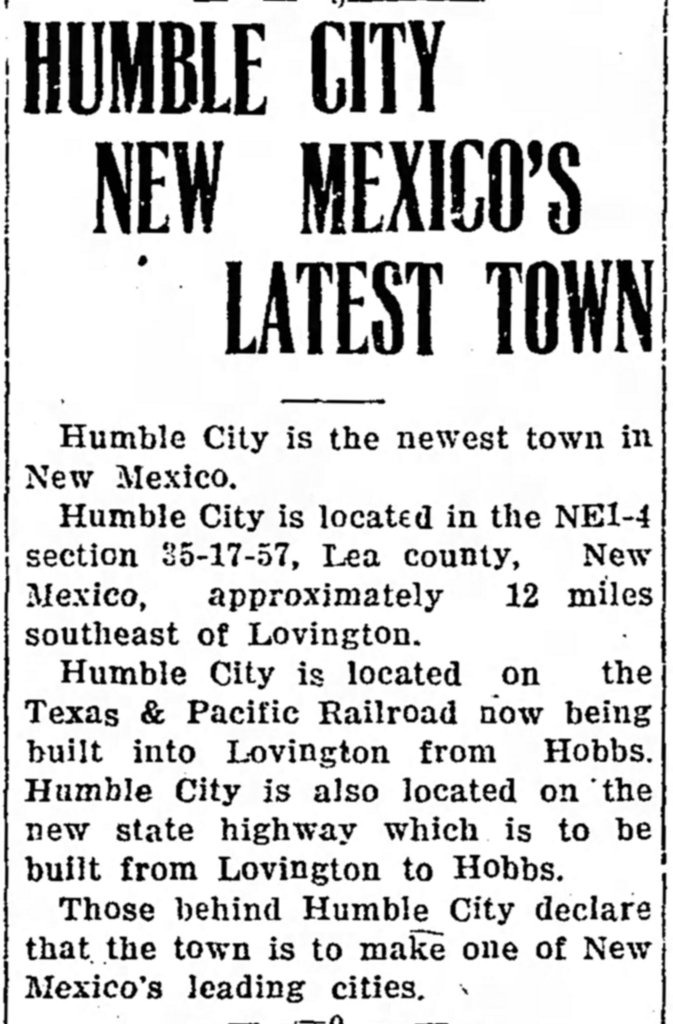
    Humble oil company did a good bit of exploration in the early days of the Hobbs oilfield. Humble City was founded about 1930 and had a post office for about 46 years.

    Roswell Daily Record, May 31, 1930

    Humble City did not blossom as much as the article had predicted, but it is still on the map.

  • Caprock

    The community of Caprock is located just inside the northwestern border of the county. It takes its name for the geological formation that is found in southeastern New Mexico where to the east, the surface is flat while to the west it drops off rapidly. West of Caprock, the surface descends to the Pecos river. Caprock is located just under 25 miles northwest of Tatum and 47 miles roughly due east of Roswell on Highway 380.

    Charles E. “Ed” Crossland is credited for having founded the settlement in 1913 and serving as its first postmaster. (1) The 1920 census showed Crossland, his wife Lillian and son Ed, Jr. living there and his profession was listed as farmer. In 1930 Crossland and his family still resided there and his profession was listed as being a teamster for the state highway department while Ed. Jr. listed his as being a wheat farmer. Charles passed away in 1948 in Roswell at the age of 67 and is buried at South Park Cemetery. His wife Lillian survived him over thirty years, remarried and died in California. Ed Crossland Jr. remained in the Roswell area where he lived with his family.


    “The cap, or hard layer, underlying the Llano Estacado is a major geological feature known as the Caprock. It is not a rock layer in the usual sense of the term but is more technically a “hard-pan” layer that developed a few feet below the ground as highly mineral subsoil particles cemented themselves together to form a rock-like layer that resists erosion. Although the name Caprock technically applies only to the formation itself, the expression is often loosely used to mean the whole Llano Estacado. The Caprock escarpment was formed by erosion about one million to two million years ago.” (Excerpt from https://www.tshaonline.org/handbook/entries/caprock)


    (1) Julyan, Robert, “The Place Names of New Mexico,” University of New Mexico Press, 1998.

  • Buckeye

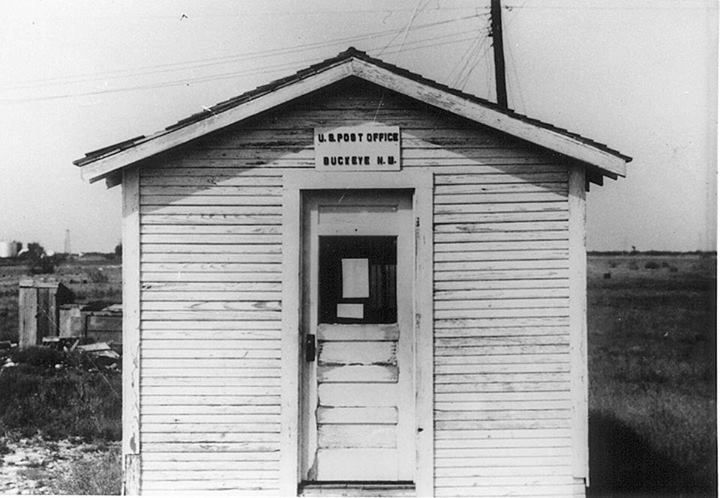
    According to most sources, Buckeye grew up as the oilfield business increased. It was named for the Buckeye Sheep Ranch which was located in the area. At various times, it included a grocery store, as many as two gas stations, a cafe, welding shops, a hardware store and post office. (1)

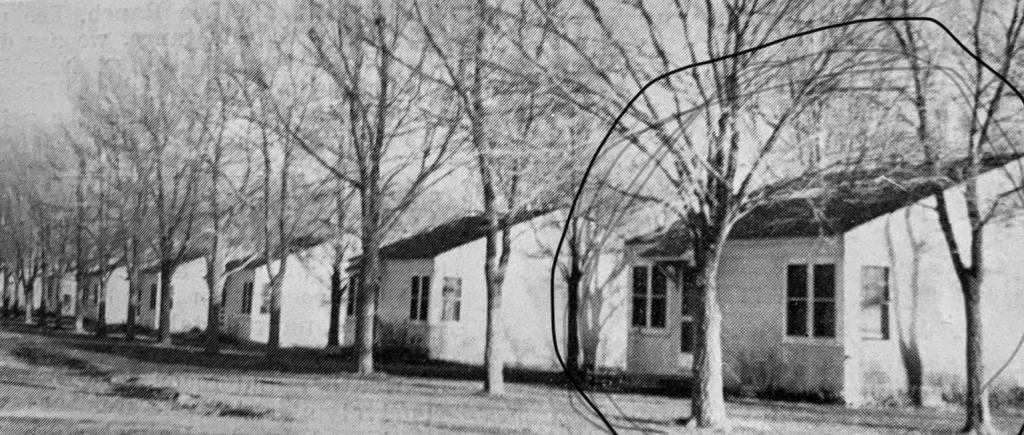
    In addition to the ranches, primarily the Lee, Eidson and Scharbauer ranches, there were a number of production camps including Phillips and Texaco, a large gasoline plant built by Phillips along with housing. The area also included a school at one time, and a Baptist church.

    Below are some images of Buckeye as it probably looked in the 1950s and 1960s.

    Undated Photo of Buckeye
    Undated photo of Buckeye
    Post office built by Jake Walters
    Phillips gasoline plant housing

    (1) Lynn C. Mauldin, Lea County New Mexico, A Pictorial History, The Donning Company, 1997.