On March 7, 1939, the Jal Flare contained an article that recounted the first oil wells in the area. The first discovery well was a wildcat, the Rhodes #1. Drilled in 1927 by Donley Brothers it produced a gas and sweet oil well that flowed mostly gas and some oil. It was quickly followed by Continental Oil Comapny’s Eaves well, south of town and the Shoals wells. Skelly then struck oil on the Joiner lease.
This led to a boom and Jal grew in response. Drilling activity declined over the next few years and population declined until there was another boom of sorts beginning in 1936, when Roy Stovall and Culbertson and Irwin brought in a well in the Jal Sand Area. A dry hole by Phillips was followed by this offset well. The article described the pays on the east side of town as being in sand and on the west being in limestone.
The article concluded by commenting that the discovery of oil was expected to lead to continued growth as surrounding exploratory wells are drilled.
One of the early families to come to the area were the Forts. Benjamin Herman Fort was born December 15, 1857 in Scott County, Arkansas to John Gabriel Fort and Dorinda Jane Bell Fort and was the youngest of their eleven children. Benjamin married the former Louisa Swilling “Lou” Bramlett in Paris, Arkansas in 1879. In the years that followed, they had at least about twelve children of their own and lived first in Arkansas before settling down in Brown County, Texas. They were living in Texas when in 1902, they decided to take the younger children and make the long trip by covered wagon to New Mexico. However, Lou did not survive the journey. She passed away about 130 miles from their destination and was buried in the small community of Fluvanna, Scurry County, Texas. Benjamin and the children continued on to the area near Lovington, which was then part of Chaves County.
Fort Family about 1902 – Walter, Dorinda, Mae, Nannie, Lula Second Row: Herman, Johnny Front Row: Lillie, Eddie, Benjamin H. (Father), holding Bessie, Louise (Mother), holding Adriane and Claudie. Photo is believed to be in the public domain.
Benjamin and the children settled not far from the Texas border. Some, if not all, of their property has remained in the family since that time. A number of the children of Benjamin and Lou Fort remained in the area or came to the area to live including Nannie Fort Allen, Benjamin Walter Fort, Dorinda Jane Fort Mann, John Ruben Fort, William Herman Fort, Eddie Thomas Fort and Claudie Adolphus Fort. Benjamin died in Texas in 1929 and is buried with several other family members in Antioch Cemetery in eastern Lea County.
William Standifer Williams was born in the early 1860s in Chattanooga, Tennessee to Samuel Lowry Williams (1807-1898) and Katuriah Taylor Williams (1825-1893), a farming family. His father was one of the earliest Anglo residents of that area and is known as the Father of Chattanooga. William was one of the youngest of some thirteen siblings and half siblings. Some accounts give William’s year of birth as 1861 and others show it to be as late as 1864. William lived with his large family until at least 1880. The actual date of their marriage is unknown, but William married Minnie Alice Anderson of Sabine County, Texas prior to 1900. The couple resided for a number of years in Indian Territory, now Oklahoma. William is said to have traveled to what was then Chaves County, New Mexico Territory in 1898 and began to acquire land but returned to his cattle operation in the Oklahoma Territory with his wife. They were still living in Indian Territory in 1900 when their first child was born. Two more children were born there and after the third, George Howell Williams, was born, they came by wagon in 1907 to William’s property and officially homesteaded in New Mexico on property located just east of the Caprock and roughly sixteen miles west of Lovington. The location was near a water source known as Old Cedar Lake. It was water, but was once described as “gippy” by a descendant. Cedar Lake was a landmark in the area, however.
William and Minnie operated their cattle ranch for the next thirty-eight years until William’s death in 1936. It was known as the Plains Cattle and Sheep Company and at one point amounted to at least 275 sections of land. The ranch headquarters had initially consisted of a dugout residence but most of the time, the family resided in Artesia. Williams was often referred to in the local newspapers in connection with his cattle operation. Williams acquired the nickname “Colonel” reportedly from his stately stature while astride his horse, but he is not known to have served in the military. The ranch was on the western side of Lea County when it was created out of Eddy and Chaves counties in 1917.
William was nominated for the Lea County Cowboy Hall of Fame for a number of years and was inducted into the organization in 1992. Comments about Williams included mention that his ranch headquarters was always a welcome stop for freighters passing through the area and that Mr. Williams was known to be a mentor to younger ranchers in the area.
Mr. Williams died in 1936. Mrs. Williams survived him until 1956. Both are interred in Woodbine Cemetery in Artesia. After Mr. Williams’ death, the ranch was divided among the couple’s children.
The Lea County second water Conservation District Board of Supervisors have selected Henry Harada as Conservation Farmer for 1969.
Henry was born and raised at Rocky Ford, Colorado. In 1942 he went into the armed services where he served until 1945. In 1946 he married Amy Watanave, also from Colorado.
…
Henry farmed one year at Rocky Ford after he left the service before moving to Lea County in February 1948.
He purchased 1200 acres of land which was all in sod. He now operates about 906 acres. His cropping system consists of alfalfa, cotton, oats, grain sorghum and vegetables in rotation. Vegetables are made up of onions, peppers, tomatoes, cabbage, peas, beans, cantaloupe, squash, okra and cucumbers. Crops are staggered so that each is coming off at different times of the year. This permits best of irrigation, with each having a different time of the year for peak irrigation.
In 1956 Henry laid 4 mile of concrete ditch. Since that time he has continued to install permanent irrigation practices to improve the efficiency of his irrigation. He now has nearly two miles of concrete ditch and 1/2 mile of underground irrigation pipeline installed.
Henry has many market outlets for his produce. He markets small vegetables at Midland, Clovis Lubbock and Hobbs. Onions are transported to Rocky Ford, Colorado. Labor does not seem to be a problem in Henry’s operation. Most of his hands live in or around Lovington. He employs 60 to 70 hands during cantaloupe harvest. He employs school kids during the summer months. He keeps six hands employed year around.
Henry is a member of Farm Bureau and the Chamber of Commerce. He has been a member of the Chamber for five years.
His wife Amy is very active in the Methodist Church and is a member of the Woman’s Club. Both belong to bowling leagues.
[Lovington Daily Leader, Lovington, NM. 4 Dec 1969.]
It’s not all that often that someone from Lea County gets written up in a state wide magazine, but in 1977, the Hobbs Flare told of Lovington resident Pearl Ditmore’s write up in the June issue of New Mexico Magazine. Pearl came to Lovington shortly after World War II and in her first local restaurant configuration, she served meals and took in boarders at an old house at 19 West Central, the road that runs south of the court house. Pearl liked to cook and be with people. Her cooking style widely appealed to those in the region who would come there to eat or take away meals for later. She eventually moved to her best known location on Love Street. All meals were $2.50. There were no waiters or waitresses and no tips were allowed. Patrons were asked serve themselves and to bus their own dishes and silverware when they were finished with their meals.
Ditmore began serving breakfast at 6:30 AM and that meal lasted until 10:30. Lunch was served from 10:30 to 2:00 in the afternoon. There was no regularly scheduled evening meal, but a larger back room was available for gatherings such as banquets, luncheons and dinners. It was not unusual to read announcements in the local paper that a meeting of one of the civic clubs would be held at some appointed time at Pearl’s.
Pearl Barbour was born in Bartlesville, Oklahoma in 1914. She was taught to cook by her grandmother. After graduating from high school and attending business school, she had difficulty finding a job. Her grandmother helped her to open a hamburger restaurant in Gladewater, Texas where she catered to oilfield customers. After a number of other moves following the oil boom, she relocated to Lovington. Pearl married Don Dorrell Ditmore in 1952. Pearl also operated a boarding house before demand allowed her to tear out some walls and open it up to create a larger dining area.
Family style cooking was the norm and it became a popular place to eat in the county. For many years, the business did not even have a sign to announce the name. It wasn’t needed. Pearl was also known for her kindness to people down on their luck, including spouses of prisoners at the jail. She died in 2012 at the age of 97. Her obituary closed with these words, “We salute Pearl Barbour Ditmore for her long tenure of unselfish service to our community. Pearl, you have earned your crown of jewels in Heaven.”
On last Friday evening, June 8, 1928, at 6:30 at the home of his daughter, Mrs. John Gaither, near Pearl, New Mexico, our beloved friend T.P. Bingham, closed his eyes on the pain and suffering of this world to open them in that City beyond where pain and suffering are unknown.
He had been a constant sufferer for more than two years and almost daily expressed a desire that God would call him up higher, yet he never lost interest in his fellow man, his Church nor in the political activities of his state and nation.
He was a noble character, always holding out a helping hand to cheer and always had a kind word for all.
He was born in Choctaw County, Miss. January 10, 1840. He moved to Texas when he was 5 years old. He was truly a frontiersman. He joined the Texas Rangers at the age of 20, working with them to keep down Indian depredations in Western Texas and Eastern New Mexico.
When the Civil War was declared, he received a discharge from the Ranger force and enlisted in the 19th Texas Company, serving in various capacities till the close of the war. In 1866, he married Miss Mary Jane Morgan of Milford, Ellis County, Texas. She passed away in 1886. He later was married to Mrs. Letha Ann Smith of Corsica, Texas. We have often heard him say that he had been fortunate in having married the two best women in the world.
In 1918, he was again called to give up a dear companion, and since then he has made his home with his children.
No one is perhaps better known or more loved in Lea County than he, by both old and young. He was indeed “a friend to every one.”
He came to New Mexico 25 years ago and has always been a staunch worker for the good of his state, county and town and always very optimistic as to their future. He served as Justice of the Peace for a number of years at Monument and also at Lovington. He also served as Probate Judge of Lea County for four years. He has been a member of the Baptist Church nearly 65 years, a consistent, devoted Christian, living the “golden rule”.
He leaves 5 children to reverence his memory. They were all with him at the time of his death. They are Mrs. Nanny L. Cathey, Jayton, Texas; T.S. Bingham, Lovington; Mrs. John Gaither, Pearl; Bailey Bingham, Aspermont, Texas; and Mrs. B. Hardin, Carlsbad.
There are 21 grandchildren and 8 great grandchildren, all of whom revere the name of grandfather. The funeral services were at the Baptist Church in Lovington of which he was a consistent member and was conducted by Rev. W.G. McArthur, Supt. of the Orphans Home at Portales, assisted by Rev. Parker and Beauchamp. This service was very beautiful and impressive, Rev. McArthur being his old-time friend who paid many loving tributes to his memory. One of the most beautiful things said was that Judge Bingham had had more influence in his spiritual development than any other man. The music consisted of some of the favorite songs of the deceased, among them being, “Rock of Ages”, “Shall We Gather by the River”, “When the Roll is Called up Yonder”, and “By the Touch of His Hand on Mine”.
A short service was held at the Lovington Cemetery, after which all that was mortal of “Grandpa” Bingham was tenderly laid to rest by the side of his dear wife, whom most remember with love. This dear old “Soldier of the Cross” has passed earth’s shadow into a glorious life beyond, where no partings are, neither pain, nor sorrow and where he lovingly beckons us to follow.
[Lovington Leader, Lovington, NM. 15 Jun 1928. Submitted by David L. Minton, Lea County Historian.]
1916 – Left to right: Dad Steele, T. P. Bingham, George McGonigal – Preparing to attend Confederate Veterans Reunion in Washington, D. C. – Image from Findagrave.com
Prominent Lea County Oil and Cattleman Dies After Illness Of Several Months.
Col. C. D. Woolworth, widely known politician and prominent cattle and oil man, died Friday night, October 28th at 10:30. He was receiving treatment in the Shannon hospital in San Angelo, Texas at the time of his death. He had previously spent several months at Johns-Hopkins Hospital in Baltimore, Maryland. Col. Woolworth, who formerly was a resident of Lea county and of Jal, had been ill for the past several months. Col. Woolworth was well-known as a philanthropist.
Funeral services were held at Robert Massey Funeral Home in San Angelo, and were conducted by Rev. Foreman. A large and beautiful floral offering was presented.
Col. Woolworth was buried in the Fairmont Cemetery in San Angelo.
He is survived by five sisters, Misses Clara, Litie, Mae , and Elizabeth Woolworth of San Angelo, and Mrs. Watkins of Henderson, Texas; one brother, Dr. Woolworth of Shreveport, Louisiana and an aunt, Mrs. Litie Paxton of San Angelo.
Those who attended the services from Jal were Mr. and Mrs. Peter Bish, Mr. and Mrs. R. J. Wilson, Messers. Bill Danner, Johnny Stuart, Penn Combest, and M. I. Humphries.
Mrs. A. Q. Cooper First Saw Site of Jal in Eighties
Mrs. Cooper first visited Jal at the age of eleven. She came from Palo Pinto. She later went to Chattanooga, Tennessee to attend school. After marrying Mr. A. Q. Cooper in Midland, Texas she moved to Jal in 1896 to make her home.
Mrs. Cooper is a sister-in-law to Mr. W. C. Cochran, founder of Jal. It was on his Bar-Two Mule Shoe ranch that the townsite of Jal was founded.
From the Memories of a Real Old Timer
My first visit to these parts dates back to the eighties. In fact, I believe it was the year of 1889. My sister and her husband, John M. Cowden and his two older brothers, Billie and George, who were also my step brothers, had come out several years previous and brought their small bunch of cattle and established a temporary camp at the northwest edge of the White Sands. They turned the cattle loose as there was plenty for them to eat on the hard flats and they could get an abundance of water by merely trampling around on the sand and waiting for the water to rise.
They remained there only a short time while they were looking for a better place. They finally settled on the present site of upper Jal and there established their first homes. These homes were dugouts, covered with tents. It was about this time that they bought the J. A. L. brand from L. A. Lynch. From that time on that part of the draw has been known as the Jal Draw.
At this time there were still a few buffalo in the country and on one occasion when the three women and a visiting woman were at the ranch alone with us children, we spied five buffalo coming over the hill. The visiting woman took down the old buffalo gun and shot. The gun went off accidentally and hit one of them. She took aim and fired again. Two buffalo fell. There we were with two dead buffalo and just four lone women. Then as luck would have it, the boys came in unexpectedly that night in time to skin and hang the buffalo. This was my only experience in eating buffalo meat. Another amusing, but at the time tragic, incident of the time occurred when two of the milk cows licking salt from a tub near one of the tents hooked one another and one of them fell through the tent on a bed in the dugout on which lay a sleeping baby. With much bucking and plunging, which almost wrecked the domicile and with some help from us the cow finally got out.
To the best of my memory at that time there were only three or four other ranches in this vicinity. Namely, the Half Circle Two’s, owned by Fred and Dock Cowden, cousins of the aforementioned Cowden brothers. This ranch was located near Custer Mountain west of the present town site of Jal. (text missing) the present town site of Jal, (text missing) at that time being the Bar Two Mule Shoe ranch, owned and established by W. C. Cochran, who later became my brother-in-law. Other ranchers north were W. C. Divers and Bill Holloway. All of these ranchmen except Holloway came to this country from Palo Pinto.
This is a brief outline of the history of this country and its settlers preceding the time when I came here with my husband, A. Q. Cooper and two small children, to make my home at the Bar Two Mule Shoe (what is now the town called Jal) about the year of 1896. This does not purport to be authentic as to dates as I made no record of such.
The following incidents are of no importance to the history of this country, but may be interesting for you to know.
Many people have wondered about the origination of the name Son-of-a-Gun which has long been applied to a cowboy stew. I know of the origin of this name for I hear my brother tell the story and he was present at the time. My brother was working for the Hat Wagon once and the cook prepared a dish which they all called Cowboy Stew. Some visiting cattle buyers asked the name and when the cook told them, one of them said, “I don’t know any better name for it, but it’s a son-of-a-gun of a good dish.” Thus was the name originated.
One of my most impressive memories is of remarks made by the three women who pioneered this land. Mesdames Billy, George and John M. Cowden, when they admitted that their beautiful homes built in Midland, Texas years later held no thrill for them like the little one room plank houses which replaced the dugouts on the old Jal Draw.
No stretch of the imagination could have pictured to me the Jal of today from my old home site under the hackberry trees which was then the headquarters of the Mule Shoe Ranch. (Editorial note: The headquarters spoken of above were on the site of what is now Hubbs and Justice.)
Harold Runnels was born May 17, 1924 to Elbert Dewey Runnels (1898-1969) and Stella McCutcheon Runnels (1898-1964) in Dallas, Texas. Dewey, his father, had grown up in a farming family living in nearby Kaufman, Texas. By the 1920 Census, Dewey and Stella had married, Dewey was working for a tractor company and they were living close to downtown Dallas. By 1930, both Harold and his older brother Elbert had been born, completing their small family.
Harold was a graduate of Dallas Woodrow Wilson High School and attended Cameron State Agricultural College in Lawton, Oklahoma. Prior to World War II, he worked in some capacity for the Federal Bureau of Investigation in Washington, D. C. When the United States entered the war, he enlisted in the Army Air Corps. After the war, he worked for about six years in Magnolia, Arkansas for Magnolia Amusement Company before moving to Lea County, New Mexico in 1951.
Around 1943, he was married to Dorothy Frances Gilland. The first of their four children was born in 1945. In Lovington, Harold became a partner in Southland Supply Company before forming Runnels Mud Company, which supplied drilling mud to companies drilling oil wells, and the RunCo Acidizing and Fracturing Co., another oilfield service company, both of which he owned and operated until shortly before he died.
His first venture into politics was having been elected as a Democrat to the New Mexico state Senate in 1960. For the next twenty years, he served his home area either as a state senator or United States Representative. Runnels was first elected to the U. S. House from New Mexico’s newly created Second District in 1970 after serving 10 years in the state Senate, defeating Republican Ed Foreman for the House seat. He first served in the Ninety-second Congress and to the four succeeding Congresses and served from January 3, 1971 until his death at the age of 56 from cancer on August 5, 1980.
While in Congress, Runnels had served on the House Armed Services Committee and the House Interior and Insular Affairs Committee and was chairman of the Insular Affairs Committee oversight and investigation subcommittee. Because of his background he was considered to be highly knowledgeable in issues dealing with national energy.
Runnels’ funeral was held in Lovington High School’s Pannell Auditorium with 2,000 people in attendance. Quotes from that day were carried in the August 9, 1980 issue of the Santa Fe New Mexican, as follows:
District Judge C. Fincher Neal of Hobbs called him “a humble man with humble beginnings.” and added, “In the halls of congress, he was one of the most informed men on the oil and gas industry.” United States Representative Sam Hall of Texas said, “I don’t know of any person who had the love, respect and admiration of the Congress as did Harold Runnels.”
Reverend Ed Scarborough of Wolfforth, Texas, a former pastor, referred to Runnels as “one of the great men that God has shared with us to lead us in a time of great need.” Following the service, Runnels was interred at Resthaven Memorial Gardens at the edge of town. There, a Navy Ceremonial Guard gave a 21-gun salute and played Taps.
Runnels was survived by his wife and children and was succeeded as United States Representative by Joe Skeen. His papers relating to his service in Congress were donated to Eastern New Mexico University in Portales, New Mexico.
Governor Lindsey has affixed his signature to the Lea County bill, which creates the twenty-eighth county in New Mexico.
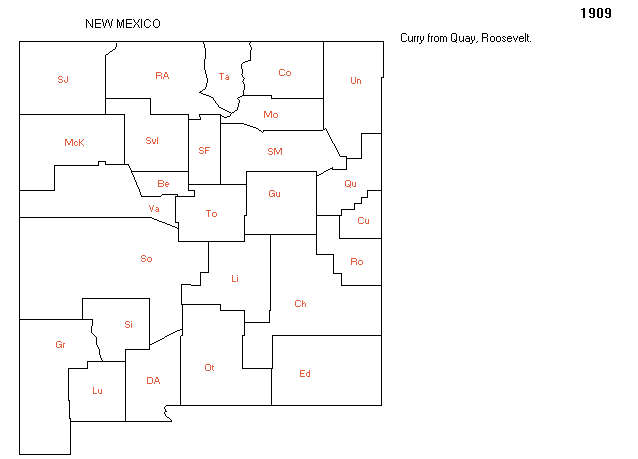
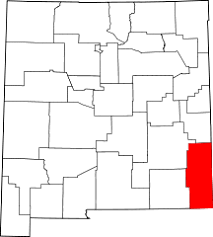
Lea county takes a strip off the eastern side of Eddy county, also a big piece from the southeast part of Chaves county and will have an assessed valueation of about $6,000.00. Lovington is named as the county-seat. [House Pioneer News, House NM. 16 Jan 1917.]
Lea County Bill Passed By Senators.
Santa Fe, March 5. – Lea County is almost as good as organized. The house bill providing for its establishment ws passed by the senate today without amendment.
The bill is now ready for the signature of Governor Lindsey, and it is believed that the governor will sign it without delay. Lea will be the twenty-eighth county in New Mexico and the second to be established by the third state legislature, de Baca being the other. Lea county bill was not passed until after a hard fight. More than an hour of the time of the senate was consumed in consideration of the various amendments proposed ot the bill and in the discussion that followed the that “do now pass.” Senator Gallegos, chairman of the committee on private, county and municipal corporations, led the fight for the passage of the bill, while Senator Isaac Barth and Senator Skeen were most vigorous in opposition to it.
It was evident that the word had been passed out that the new county should be created. The only hope of the opponents of the bill was to amend it and in that way there was a chance that amendments might not be concurred in by the house and that the bill would be lost in the eleventh hour rush.
The advocates of the bill, however, were well organized, and one amendment after another was voted down, the count being in all cases 14 to 8 in favor of the motion to table the proposed amendment. One amendment proposed to leave the creation of the new county to a referendum vote of the people of the territory affected and on this amendment Senator Barth made his most strenuous stand.
It was apparent that Mr. Barth was back in his old time form. With only a few days left of the session and no opportunity for hearing of the contest against him instituted by W. H. Chrisman the Bernalillo county senator seemed to feel that the shackles had been stricken from his fettered limbs and that he was a free man once more. He acted just like he used to act.
Senator Barth charged the republican majority with playing politics in the creation of democratic counties. He acknowledged that all during the session the republicans have been courteous and considerate of the rights of the minority and lamented that such was to be the case no more. He warned the republicans that they were on a cold trail in their fell designs and declared that the only effect of stirring up dissension among Pecos Valley democrats would be to bring on more democrats in the general election.
On the final showdown, all the republican senators voted in favor of the bill, while three democrats, Senators Calisheh, Lea and Heratelder, voted with them. The seven adverse votes were cast by the democrats – Roswell News [Lovington Leader, Lovington, NM, 9 Mar 1917.]


 Old Lea County, N.M.